
Search Market Research Report
Fish Oil Market Size, Share Global Analysis Report, 2026-2034

Fish Oil Market Size, Share, Growth Analysis Report By Source (Anchovy, Mackerel, Sardines, Cod, Herring, Menhaden, and Others), By Application (Aquaculture, Animal Nutrition & Pet Food, Pharmaceuticals, Supplements & Functional Food, and Others), By End-User (Adults, Geriatric, Children, Veterinary, and Others), and By Region - Global Industry Insights, Overview, Comprehensive Analysis, Trends, Statistical Research, Market Intelligence, Historical Data and Forecast 2026-2034
Industry Insights
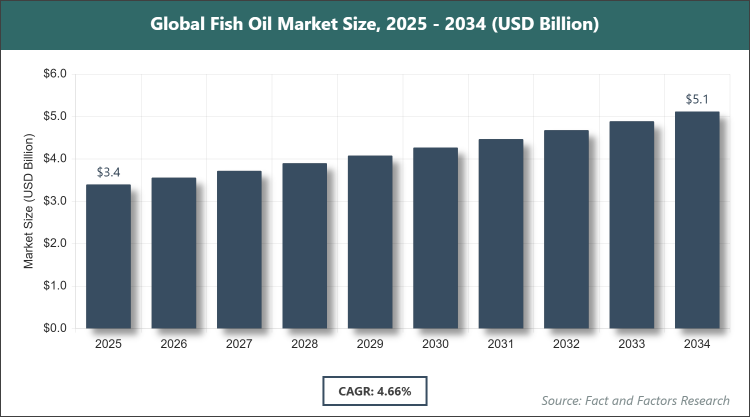
[228+ Pages Report] According to Facts & Factors, the global Fish Oil market size was estimated at USD 3.4 billion in 2025 and is expected to reach USD 5.12 billion by the end of 2034. The Fish Oil industry is anticipated to grow by a CAGR of 4.66% between 2026 and 2034. The Fish Oil Market is driven by rising demand for omega-3 fatty acids in supplements and aquaculture feed.
 Market Overview
Fish oil is a fatty oil derived from the tissues of oily fish species, rich in omega-3 fatty acids such as eicosapentaenoic acid (EPA) and docosahexaenoic acid (DHA), which are essential for human and animal health. This market involves the extraction, refining, and distribution of fish oil for use in dietary supplements, animal feed, pharmaceuticals, and other applications, emphasizing sustainable sourcing to meet global demand for nutritional and health-enhancing products.
Key Insights
- As per the analysis shared by our research analyst, the Fish Oil market is estimated to grow annually at a CAGR of around 4.66% over the forecast period (2026-2034).
- In terms of revenue, the Fish Oil market size was valued at around USD 3.4 billion in 2025 and is projected to reach USD 5.12 billion by 2034.
- Due to a variety of driving factors, the market is predicted to rise at a significant rate. The Fish Oil Market is driven by increasing health awareness, expanding aquaculture industry, and growing demand for omega-3 enriched products.
- Based on the Source, the Anchovy segment dominated the market in 2025 with a market share of 32% and why it is dominated due to its high omega-3 content and abundant supply from sustainable fisheries in regions like Peru.
- Based on the Application, the Aquaculture segment dominated the market in 2025 with a market share of 35% and why it is dominated owing to the essential role of fish oil in enhancing growth and health in farmed fish species.
- Based on the End-User, the Adults segment dominated the market in 2025 with a market share of 45% and why it is dominated as it caters to widespread use in dietary supplements for cardiovascular and cognitive health benefits.
- Based on region, Europe was the leading revenue generator in 2025, holding a market share of 38%, due to strong regulatory support for sustainable sourcing and high consumer demand for health supplements.
Growth Drivers
- Rising Health Awareness and Demand for Omega-3 Supplements
The increasing consumer focus on preventive healthcare and the benefits of omega-3 fatty acids for heart health, brain function, and inflammation reduction has significantly boosted the demand for fish oil products. This trend is supported by medical endorsements and growing incorporation into functional foods and beverages, driving market expansion globally.
Moreover, the expansion of e-commerce platforms has made fish oil supplements more accessible, allowing consumers in remote areas to purchase high-quality products, further accelerating market growth through diversified distribution channels.
Restraints
- Sustainability Concerns and Overfishing Issues
The reliance on wild-caught fish for oil extraction raises environmental concerns, including overfishing and ecosystem disruption, which can lead to supply shortages and regulatory restrictions. These factors increase production costs and limit availability, posing challenges to consistent market supply.
Additionally, fluctuations in fish harvest due to climate change and seasonal variations exacerbate supply chain instabilities, affecting pricing and profitability for manufacturers and restraining overall market growth.
Opportunities
- Expansion in Aquaculture and Alternative Sourcing
The growth of the aquaculture industry presents opportunities for fish oil as a key ingredient in feed formulations, with innovations in sustainable farming practices enhancing yield and quality. This sector's expansion supports increased production without depleting wild stocks.
Furthermore, advancements in algal-based omega-3 alternatives offer eco-friendly options, allowing companies to diversify portfolios and appeal to vegan and sustainability-conscious consumers, opening new market segments.
Challenges
- Price Volatility and Competition from Plant-Based Alternatives
Volatile raw material prices due to supply disruptions and geopolitical factors challenge profitability, making it difficult for smaller players to compete. This instability affects long-term planning and investment in the industry.
The rise of plant-based omega-3 sources, such as flaxseed and algae, competes directly with fish oil, attracting health-conscious consumers seeking non-animal alternatives and potentially eroding market share.
Report Scope
Report Attribute |
Details |
Market Size 2025 |
USD 3.4 Billion |
Projected Market Size in 2034 |
USD 5.12 Billion |
CAGR Growth Rate |
4.66% CAGR |
Base Year |
2025 |
Forecast Years |
2026-2034 |
Key Market Players |
Omega Protein Corporation, Pelagia AS, Croda International Plc, BASF SE, DSM, GC Rieber, Copeinca AS, TripleNine Group A/S, FF Skagen A/S, Marvesa Holding N.V., and Others. |
Key Segment |
By Source, By Application, By End-User, and By Region |
Major Regions Covered |
North America, Europe, Asia Pacific, Latin America, and the Middle East & Africa |
Purchase Options |
Request customized purchase options to meet your research needs. Explore purchase options |
Market Segmentation
The Fish Oil market is segmented by Source, Application, End-User, and region.
Based on Source Segment, the Fish Oil market is divided into Anchovy, Mackerel, Sardines, Cod, Herring, Menhaden, and others. The most dominant segment is Anchovy, which leads due to its rich EPA and DHA content and large-scale sustainable harvesting in key regions like Peru, driving the market by providing cost-effective raw materials for high-volume production in supplements and feed. The second most dominant is Cod, prominent for its premium quality and use in pharmaceutical-grade oils, contributing to market growth through targeted applications in health products that command higher prices.
Based on Application Segment, the Fish Oil market is divided into Aquaculture, Animal Nutrition & Pet Food, Pharmaceuticals, Supplements & Functional Food, and others. The most dominant segment is Aquaculture, excelling because of its critical role in improving feed efficiency and fish health in the rapidly expanding farmed seafood industry, propelling the market via increased global seafood consumption. The second most dominant is Supplements & Functional Food, valued for addressing nutritional deficiencies and health trends, boosting market expansion by integrating into daily diets and wellness routines.
Based on End-User Segment, the Fish Oil market is divided into Adults, Geriatric, Children, Veterinary, and others. The most dominant segment is Adults, dominating due to widespread adoption in preventive health measures against chronic diseases, driving the market with high demand for convenient supplement formats. The second most dominant is Veterinary, essential for animal health in pet food and livestock feed, contributing to market progress through the growing pet ownership and intensive farming practices.
Recent Developments
- In May 2025, IFFO reported a 5% increase in global fish oil production through July, driven by yield recovery in key regions following environmental challenges, supporting stable supply for nutraceutical and feed sectors.
- In November 2025, the Peruvian authorities set a quota of 1.63 million metric tons for the second fishing season, aiming to balance sustainability with market demand amid rising global needs.
- In 2025, Omega Protein Corporation completed a new integrated processing facility in Virginia, enhancing capacity for high-quality fish oil and strengthening U.S. supply chains for domestic and export markets.
Regional Analysis
- Europe to dominate the global market
Europe maintains its position as the dominant region in the Fish Oil market, supported by stringent sustainability regulations and advanced processing infrastructure. Norway emerges as the leading country, with its extensive fisheries and focus on high-purity exports driving innovation in omega-3 concentrates for global supplements. The region's emphasis on traceability and eco-certifications like MSC fosters consumer trust, while collaborations with aquaculture hubs ensure consistent supply. Germany's role in pharmaceutical applications complements this, integrating fish oil into clinical nutrition.
Asia-Pacific shows the fastest growth, propelled by booming aquaculture and rising health consciousness. China dominates, leveraging vast coastal resources and government-backed feed programs to meet domestic and export demands in seafood farming. India's expanding middle class boosts supplement uptake, while Japan's aging population drives premium omega-3 products. The region's investment in refining technologies addresses quality concerns, enhancing competitiveness in international trade.
North America exhibits steady advancement, fueled by wellness trends and regulatory support for nutritional claims. The United States leads, with strong retail channels promoting fish oil for heart health amid high chronic disease rates. Canada's Atlantic fisheries contribute through sustainable harvesting practices, supporting pet food innovations. Insurance coverage for supplements in some plans further encourages consumption.
Latin America demonstrates emerging potential, particularly in export-oriented production. Peru stands out as the key country, capitalizing on anchoveta abundance to supply global markets with cost-effective crude oil. Chile's focus on salmon farming integrates local oil use, while Brazil's growing pet industry absorbs increasing volumes. Regional trade agreements facilitate expansion.
The Middle East & Africa region experiences gradual progress, influenced by nutritional initiatives. South Africa leads, incorporating fish oil in animal feed for livestock enhancement amid food security efforts. Saudi Arabia's health campaigns promote supplements, addressing dietary gaps in urban populations. UAE's import hubs distribute to neighboring markets, fostering regional growth.
Competitive Analysis
The global Fish Oil market is dominated by players:
- Omega Protein Corporation
- Pelagia AS
- Croda International Plc
- BASF SE
- DSM
- GC Rieber
- Copeinca AS
- TripleNine Group A/S
- FF Skagen A/S
- Marvesa Holding N.V.
The global Fish Oil market is segmented as follows:
By Source
- Anchovy
- Mackerel
- Sardines
- Cod
- Herring
- Menhaden
- Others
By Application
- Aquaculture
- Animal Nutrition & Pet Food
- Pharmaceuticals
- Supplements & Functional Food
- Others
By End-User
- Adults
- Geriatric
- Children
- Veterinary
- Others
By Region
- North America
- The U.S.
- Canada
- Mexico
- Europe
- France
- The UK
- Spain
- Germany
- Italy
- Rest of Europe
- Asia Pacific
- China
- Japan
- India
- Australia
- Southeast Asia
- Rest of Asia Pacific
- The Middle East & Africa
- Saudi Arabia
- UAE
- Egypt
- Kuwait
- South Africa
- Rest of the Middle East & Africa
- Latin America
- Brazil
- Argentina
- Rest of Latin America
Industry Major Market Players
- Omega Protein Corporation
- Pelagia AS
- Croda International Plc
- BASF SE
- DSM
- GC Rieber
- Copeinca AS
- TripleNine Group A/S
- FF Skagen A/S
- Marvesa Holding N.V.



Copyright © 2025 - 2026, All Rights Reserved, Facts and Factors