
Search Market Research Report
Pet Supplements Market Size, Share Global Analysis Report, 2026-2034

Pet Supplements Market Size, Share, Growth Analysis Report By Supplement Type (Multivitamins, Probiotics, Omega Fatty Acids, Antioxidants, and Others), By Application (Joint & Hip Care, Skin & Coat, Digestive Health, Immunity, and Others), By Pet Type (Dogs, Cats, and Others), and By Region - Global Industry Insights, Overview, Comprehensive Analysis, Trends, Statistical Research, Market Intelligence, Historical Data and Forecast 2026-2034
Industry Insights
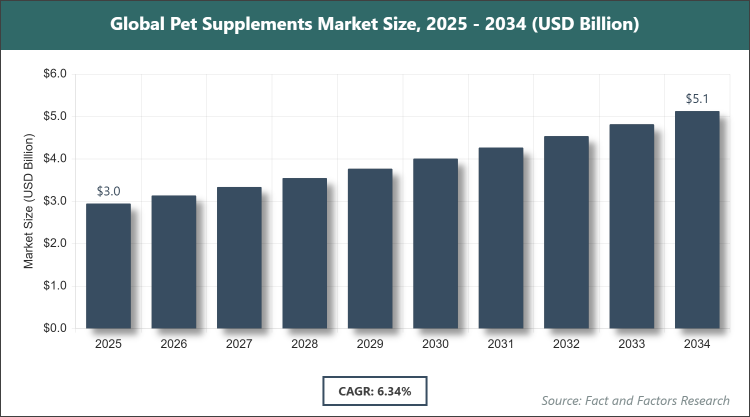
[220 Pages Report] According to Facts & Factors, the global pet supplements market size was estimated at USD 2.95 billion in 2025 and is expected to reach USD 4.82 billion by the end of 2034. The Pet Supplements industry is anticipated to grow by a CAGR of 6.34% between 2026 and 2034. The Pet Supplements Market is driven by increasing pet humanization and rising awareness of pet health.
 Market Overview
The pet supplements market involves the production, distribution, and consumption of nutritional products designed to enhance the health and well-being of companion animals such as dogs, cats, and others, including vitamins, minerals, probiotics, and specialized formulas targeting specific conditions like joint support or digestive aid, serving pet owners who seek to complement regular diets with additional nutrients to promote longevity, vitality, and preventive care in a growing culture of pet humanization. This market engages various stakeholders from manufacturers to retailers, focusing on natural and organic ingredients to align with consumer preferences for premium, science-backed solutions that address age-related issues, immune boosting, and overall wellness without relying on veterinary prescriptions in many cases.
Key Insights
- As per the analysis shared by our research analyst, the Pet Supplements market is expected to grow at a CAGR of 6.34% during the forecast period of 2026-2034.
- In terms of revenue, the Pet Supplements market size was valued at about USD 2.95 billion in 2025 and is expected to reach USD 4.82 billion by 2034.
- The Pet Supplements market is driven by increasing pet humanization and rising awareness of pet health.
- Based on the supplement type, the multivitamins segment dominated the market with a share of 35% in 2025 due to its broad-spectrum nutritional support appealing to general pet wellness needs across various animal types.
- Based on the application, the joint & hip care segment dominated the market with a share of 30% in 2025 owing to the high prevalence of mobility issues in aging pets and active breeds requiring targeted support.
- Based on the pet type, the dogs segment dominated the market with a share of 55% in 2025 as dogs represent the largest pet ownership category with diverse health supplement demands.
- North America dominated the market with a share of 43% in 2025 due to high pet ownership rates and strong consumer spending on premium pet care products.
Growth Drivers
- Increasing Pet Humanization
The trend of treating pets as family members is significantly boosting demand for supplements that mirror human health products, as owners invest in preventive care to extend pet lifespans and improve quality of life, particularly in urban households where pets provide emotional support. This driver is reinforced by social media influences showcasing healthy pet lifestyles, encouraging widespread adoption.
Additionally, marketing strategies emphasizing personalized nutrition are expanding market reach, with e-commerce platforms facilitating easy access to tailored products, thereby sustaining growth through consumer education and loyalty programs.
- Rising Awareness of Pet Health
Greater access to veterinary advice and online resources is heightening awareness of nutritional deficiencies in standard pet foods, driving supplement usage for conditions like allergies and obesity. This is supported by collaborations between vets and brands promoting evidence-based products.
Furthermore, global health campaigns and pet insurance integrations are encouraging proactive supplementation, fostering market expansion via integrated health ecosystems that prioritize holistic pet care.
- Expansion of E-commerce Channels
The convenience of online shopping is accelerating market growth, allowing consumers to compare products, read reviews, and subscribe for regular deliveries of supplements. This driver benefits from digital marketing and influencer partnerships targeting millennial pet owners.
Moreover, advancements in logistics ensure fresh product delivery, enhancing trust and repeat purchases, while data analytics help customize offerings, driving sustained revenue increases.
Restraints
- Regulatory Challenges
Varying international standards for supplement approval and labeling complicate market entry and increase compliance costs for manufacturers, limiting innovation in some regions. This restraint is exacerbated by scrutiny over unsubstantiated health claims.
Efforts to harmonize regulations through industry associations are ongoing, yet delays in approvals can hinder timely product launches, impacting overall market momentum.
- High Product Costs
Premium pricing of quality supplements deters budget-conscious consumers, especially in emerging markets where economic pressures prioritize basic pet needs over extras. This issue is compounded by raw material fluctuations.
Strategies like offering value packs and entry-level products are essential to broaden accessibility, though maintaining quality standards remains a balancing act for profitability.
Opportunities
- Innovation in Natural Ingredients
The shift towards organic and plant-based supplements presents opportunities to attract health-conscious owners seeking clean-label products free from artificial additives. This can differentiate brands in competitive spaces.
Investments in R&D for sustainable sourcing can lead to new formulations, expanding into niche markets like vegan pet care and fostering partnerships with eco-friendly suppliers.
- Growth in Emerging Markets
Rising disposable incomes in Asia and Latin America offer untapped potential for supplement adoption amid increasing pet ownership. This opportunity involves localized marketing to address cultural preferences.
Building distribution networks and educational campaigns can accelerate penetration, driving volume growth through affordable, region-specific products.
Challenges
- Competition from Pet Food Additives
Integrated nutrients in premium pet foods challenge standalone supplements by offering convenience, requiring distinct value propositions to justify additional purchases. This demands focused innovation.
Emphasizing specialized benefits like targeted therapies can help, though educating consumers on complementary use is key to overcoming perceptions of redundancy.
- Supply Chain Disruptions
Global events affecting ingredient sourcing pose risks to production consistency, impacting availability and costs. Diversification of suppliers is crucial to mitigate this.
Adopting resilient strategies like local sourcing and inventory management is vital, yet requires investment to maintain market stability.
Report Scope
Report Attribute |
Details |
Market Size 2025 |
USD 2.95 Billion |
Projected Market Size in 2034 |
USD 4.82 Billion |
CAGR Growth Rate |
6.34% CAGR |
Base Year |
2025 |
Forecast Years |
2026-2034 |
Key Market Players |
Nestlé S.A., General Mills Inc., H&H Group, Mars Inc., Virbac Corporation, Hill's Pet Nutrition Inc., Elanco Animal Health, Zoetis Inc., Nutramax Laboratories, Zesty Paws, and Others. |
Key Segment |
By Supplement Type, By Application, By Pet Type, and By Region |
Major Regions Covered |
North America, Europe, Asia Pacific, Latin America, and the Middle East & Africa |
Purchase Options |
Request customized purchase options to meet your research needs. Explore purchase options |
Market Segmentation
The Pet Supplements market is segmented by supplement type, application, pet type, and region.
Based on Supplement Type Segment, the pet supplements market is divided into multivitamins, probiotics, omega fatty acids, antioxidants, and others. The most dominant segment is multivitamins, leading the market due to their comprehensive nutritional profile that addresses general deficiencies in pet diets, driving growth by appealing to owners seeking all-in-one solutions for overall health maintenance and preventive care; the second most dominant is probiotics, which gains traction for supporting gut health amid rising digestive issues in pets, contributing to market expansion through targeted benefits that enhance immunity and well-being in stress-prone animals.
Based on Application Segment, the pet supplements market is divided into joint & hip care, skin & coat, digestive health, immunity, and others. The most dominant segment is joint & hip care, commanding the largest share because of the common occurrence of mobility problems in older pets and active breeds, propelling market growth via formulations that reduce inflammation and improve quality of life; the second most dominant is skin & coat, popular for addressing allergies and promoting shiny fur, aiding market drive by aligning with aesthetic and health concerns of pet owners.
Based on Pet Type Segment, the pet supplements market is divided into dogs, cats, and others. The most dominant segment is dogs, holding the top position owing to higher ownership rates and diverse breed-specific needs requiring supplements for energy and joint support, boosting market growth through volume sales in canine-focused products; the second most dominant is cats, which supports expansion by catering to feline-unique issues like urinary health and hairball control, helping to broaden the market in multi-pet households.
Recent Developments
- In February 2025, Elanco launched Pet Protect, a new line of veterinarian-formulated supplements for dogs and cats, marking its entry into the pet supplements category to address wellness needs.
- In January 2025, Pooch & Mutt acquired BIOME9, enhancing its offerings with science-backed gut health testing and personalized supplements for dogs.
- In March 2025, Zesty Paws introduced a new canine obesity supplement promoting fat metabolism, digestion, and satiety to tackle weight management issues.
- In February 2025, Fera Pets launched a dental support powder made from botanical ingredients and postbiotics for improved pet oral health.
Regional Analysis
- North America to dominate the global market
North America leads the pet supplements market with the United States as the dominating country, where high pet ownership rates and a culture of pet humanization drive demand for premium supplements addressing joint, skin, and digestive health, supported by advanced veterinary recommendations and widespread e-commerce access that facilitates personalized product selection, while strong marketing from major brands further solidifies its position through consumer education on preventive care.
Europe follows with significant growth led by the United Kingdom, which dominates through its emphasis on natural and organic supplements aligned with stringent animal welfare standards, integrated into daily pet routines via retail chains and online platforms, fostering innovation in breed-specific formulations that cater to diverse pet populations in urban settings.
Asia Pacific is rapidly expanding, with China as the dominating country due to rising middle-class incomes boosting pet adoption and supplement usage for immunity and coat health, aided by local manufacturing and digital marketing that target young pet owners seeking affordable yet effective wellness solutions.
Latin America shows promising potential dominated by Brazil, where increasing urbanization and pet humanization trends fuel demand for digestive and joint care products, supported by expanding retail infrastructure and awareness campaigns promoting supplements as essential for tropical climate-related health issues.
The Middle East & Africa region is emerging, led by South Africa, where growing expatriate communities and tourism influence pet care practices, driving adoption of immunity-boosting supplements through veterinary channels and online imports that address regional nutritional gaps in companion animals.
Competitive Analysis
The global Pet Supplements market is dominated by players:
- Nestlé S.A.
- General Mills Inc.
- H&H Group
- Mars Inc.
- Virbac Corporation
- Hill's Pet Nutrition Inc.
- Elanco Animal Health
- Zoetis Inc.
- Nutramax Laboratories
- Zesty Paws
The global Pet Supplements market is segmented as follows:
By Supplement Type
- Multivitamins
- Probiotics
- Omega Fatty Acids
- Antioxidants
- Others
By Application
- Joint & Hip Care
- Skin & Coat
- Digestive Health
- Immunity
- Others
By Pet Type
- Dogs
- Cats
- Others
By Region
- North America
- The U.S.
- Canada
- Mexico
- Europe
- France
- The UK
- Spain
- Germany
- Italy
- Rest of Europe
- Asia Pacific
- China
- Japan
- India
- Australia
- Southeast Asia
- Rest of Asia Pacific
- The Middle East & Africa
- Saudi Arabia
- UAE
- Egypt
- Kuwait
- South Africa
- Rest of the Middle East & Africa
- Latin America
- Brazil
- Argentina
- Rest of Latin America
Industry Major Market Players
The global Pet Supplements market is dominated by players:
- Nestlé S.A.
- General Mills Inc.
- H&H Group
- Mars Inc.
- Virbac Corporation
- Hill's Pet Nutrition Inc.
- Elanco Animal Health
- Zoetis Inc.
- Nutramax Laboratories
- Zesty Paws
Frequently Asked Questions



Copyright © 2025 - 2026, All Rights Reserved, Facts and Factors