
Search Market Research Report
Cigars and Cigarillos Market Size, Share Global Analysis Report, 2026-2034

Cigars and Cigarillos Market Size, Share, Growth Analysis Report By Type (Premium and Mass), By Flavor (Tobacco/No Flavor and Flavored), By End-User (Male and Female), and By Region - Global Industry Insights, Overview, Comprehensive Analysis, Trends, Statistical Research, Market Intelligence, Historical Data and Forecast 2026-2034
Industry Insights
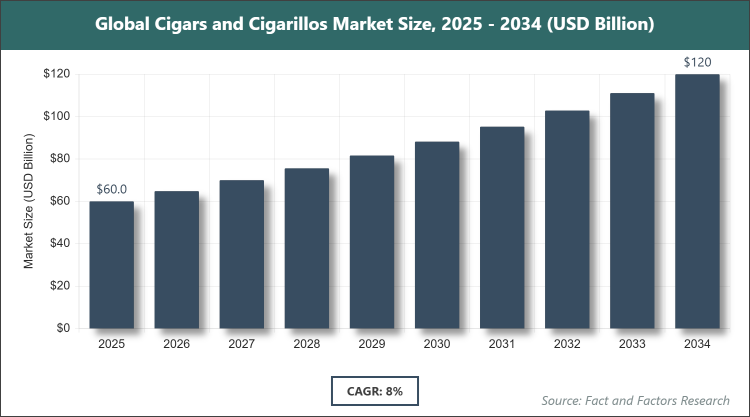
[235+ Pages Report] According to Facts & Factors, the global cigars and cigarillos market size was estimated at USD 60 billion in 2025 and is expected to reach USD 120 billion by the end of 2034. The cigars and cigarillos industry is anticipated to grow by a CAGR of 8% between 2026 and 2034. The cigars and cigarillos Market is driven by increasing demand for premium and flavored tobacco products in social and leisure settings.
 Market Overview
The cigars and cigarillos market encompasses a diverse range of tobacco products that are hand-rolled or machine-made, typically consisting of tobacco leaves wrapped around a filler of chopped or whole tobacco. Cigars are larger, premium offerings often associated with luxury and tradition, while cigarillos are smaller, more affordable versions that provide a quicker smoking experience. This market caters to consumers seeking relaxation, social bonding, and cultural rituals, with products varying in size, flavor, and quality to appeal to different preferences and occasions.
Key Insights
- As per the analysis shared by our research analyst, the global cigars and cigarillos market is estimated to grow annually at a CAGR of around 8% over the forecast period (2026-2034).
- In terms of revenue, the global cigars and cigarillos market size was valued at around USD 60 billion in 2025 and is projected to reach USD 120 billion by 2034.
- The market is driven by premiumization trends and increasing popularity of flavored variants.
- Based on the type, the mass segment dominated the market with a share of 78% due to its affordability and widespread availability.
- Based on the flavor, the tobacco/no flavor segment dominated the market with a share of 66% owing to its traditional appeal and authenticity preferred by core consumers.
- Based on the end-user, the male segment dominated the market with a share of 85% because of historical cultural associations and higher consumption rates among men.
- North America dominated the global market with a share of 35% attributed to high disposable incomes, established cigar culture, and strong presence of key manufacturers in the region.
Growth Drivers
- Rising Demand for Premium Products
The shift toward premium cigars and cigarillos is propelled by consumers' growing appreciation for high-quality, artisanal tobacco experiences that emphasize craftsmanship, unique blends, and exotic origins. This trend is particularly evident among affluent demographics who view these products as status symbols and indulgences, leading to increased sales in specialized lounges and events.
As disposable incomes rise in emerging economies, more consumers are exploring premium options, fostering innovation in limited-edition releases and collaborations that enhance brand loyalty and market expansion.
- Increasing Popularity of Flavored Variants
Flavored cigars and cigarillos, infused with tastes like fruit, chocolate, or menthol, are attracting younger and occasional smokers by offering a more approachable and enjoyable alternative to traditional tobacco flavors. This diversification helps mitigate the decline in conventional smoking due to health awareness, as flavors mask harsher notes and appeal to those seeking novelty.
Regulatory relaxations in some regions have enabled broader marketing of flavored products, boosting accessibility through online channels and driving overall category growth amid evolving consumer preferences.
- Growth in Social and Leisure Consumption
Cigars and cigarillos are increasingly integrated into social gatherings, celebrations, and relaxation routines, supported by the proliferation of dedicated cigar lounges and hospitality venues. This cultural embedding enhances community building and experiential consumption, particularly in urban areas where lifestyle trends favor premium leisure activities.
The association with sophistication and tradition continues to sustain demand, with marketing efforts emphasizing heritage and exclusivity to engage both seasoned enthusiasts and new entrants.
Restraints
- Stringent Regulations and Health Concerns
Governments worldwide are imposing stricter regulations on tobacco products, including higher taxes, advertising bans, and packaging warnings, which elevate costs and limit market reach. These measures, aimed at curbing smoking-related health issues, deter potential consumers and compress profit margins for manufacturers.
Public health campaigns highlighting risks like cancer and respiratory diseases further erode social acceptance, prompting shifts toward alternatives like e-cigarettes and reducing traditional tobacco consumption volumes.
- High Taxation and Pricing Pressures
Elevated excise taxes on cigars and cigarillos in many jurisdictions increase retail prices, making them less affordable for price-sensitive consumers and encouraging illicit trade or cheaper substitutes. This fiscal burden disproportionately affects mass-market segments, hindering growth in developing regions where economic constraints amplify sensitivity to cost fluctuations.
Supply chain disruptions, such as fluctuating tobacco leaf prices due to weather or trade issues, compound these pressures, challenging manufacturers to maintain competitive pricing without sacrificing quality.
Opportunities
- Expansion in Emerging Markets
Rapid urbanization and rising middle-class populations in Asia Pacific and Latin America present untapped potential for cigars and cigarillos, as cultural shifts toward Western lifestyles introduce premium tobacco as a luxury item. Localized marketing and affordable entry-level products can capture this demographic, leveraging growing disposable incomes and social media influence.
Partnerships with local distributors and investments in retail infrastructure will facilitate penetration, capitalizing on festivals and social events to build brand awareness and loyalty.
- Innovation in Product Formats and Packaging
Advancements in sustainable packaging, portable formats, and hybrid products blending tobacco with herbal elements offer differentiation in a competitive landscape. These innovations appeal to environmentally conscious consumers and those seeking reduced-harm options, potentially navigating regulatory hurdles more effectively.
Digital integration, such as app-based customization or virtual tasting events, enhances engagement, opening avenues for direct-to-consumer sales and personalized experiences that drive repeat purchases.
Challenges
- Supply Chain Vulnerabilities
Dependence on specific tobacco-growing regions exposes the market to risks from climate change, natural disasters, and geopolitical tensions, which can disrupt harvests and inflate raw material costs. Inconsistent quality control in supply chains further complicates production, especially for premium segments requiring aged leaves.
Diversification of sourcing and adoption of resilient farming practices are essential, yet implementation lags in some areas, posing ongoing threats to stability and profitability.
- Shifting Consumer Preferences Toward Alternatives
The rise of next-generation products like vaping devices and nicotine pouches is drawing consumers away from traditional cigars and cigarillos, particularly among health-focused younger generations. This substitution trend accelerates in regulated environments where alternatives face fewer restrictions.
Adapting through hybrid offerings or emphasizing unique sensory experiences is crucial, but requires substantial R&D investment amid uncertain returns in a rapidly evolving landscape.
Report Scope
Report Attribute |
Details |
Market Size 2025 |
USD 60 Billion |
Projected Market Size in 2034 |
USD 120 Billion |
CAGR Growth Rate |
8% CAGR |
Base Year |
2025 |
Forecast Years |
2026-2034 |
Key Market Players |
Altria Group, Imperial Brands, Swisher International, Scandinavian Tobacco Group, Swedish Match, British American Tobacco, Gurkha Cigars, JT International SA, Oettinger Davidoff AG, Philip Morris International, Habanos S.A., and Others. |
Key Segment |
By Type, By Flavor, By End-User, and By Region |
Major Regions Covered |
North America, Europe, Asia Pacific, Latin America, and the Middle East & Africa |
Purchase Options |
Request customized purchase options to meet your research needs. Explore purchase options |
Market Segmentation
The cigars and cigarillos market is segmented by type, flavor, end-user, and region.
Based on Type Segment, the cigars and cigarillos market is divided into premium, mass, and others. The most dominant segment is mass with a significant market share, as it offers affordable options accessible to a broad consumer base, driving volume sales through convenience stores and supermarkets. The second most dominant is premium, which contributes to higher revenue margins due to its appeal among affluent consumers seeking quality and exclusivity, helping to elevate overall market value through brand prestige and innovation.
Based on Flavor Segment, the cigars and cigarillos market is divided into tobacco/no flavor, flavored, and others. The most dominant segment is tobacco/no flavor with a commanding presence, favored for its authentic taste and traditional heritage that resonates with core enthusiasts, sustaining steady demand. The second most dominant is flavored, which is gaining traction by attracting new users with diverse tastes like fruit or chocolate, expanding the market by making products more approachable and versatile for occasional consumption.
Based on End-User Segment, the cigars and cigarillos market is divided into male, female, and others. The most dominant segment is male with overwhelming adoption, rooted in cultural norms and targeted marketing that positions these products as symbols of masculinity and relaxation, fueling consistent growth. The second most dominant is female, emerging as a growth area with increasing female participation in social smoking and tailored flavored options, contributing to market diversification and broader appeal.
Recent Developments
- In June 2024, Scandinavian Tobacco Group finalized the acquisition of Mac Baren Tobacco Company, enhancing its portfolio with premium pipe tobacco brands and strengthening its position in the global market.
- In August 2024, Gurkha Cigar Group introduced the exclusive Fantasma cigar for Texas-based retailer Specs, featuring unique blends to cater to regional preferences and boost retail partnerships.
- In April 2024, Gurkha Cigar Group launched a collection of six premium cigars targeted at the travel retail sector, aiming to capture impulse purchases in airports and duty-free outlets.
- In March 2024, Oliva opened the Whisky & Cigar Salon lounge in Germany, combining cigar experiences with whisky tastings to create immersive venues and drive consumer engagement.
- In Q2 2025, the U.S. government imposed a 10% tariff on all cigar imports, including from key suppliers like the Dominican Republic, potentially impacting pricing and supply chains for market players.
Regional Analysis
- North America to dominate the global market
North America maintains its leadership in the cigars and cigarillos market, primarily driven by the United States as the dominating country, where a robust cigar culture thrives through widespread lounges, festivals, and high per capita consumption. The region's affluent consumer base supports premium segments, with strong distribution networks and minimal import barriers facilitating access to diverse products from Latin America. Cultural associations with luxury and social events further solidify demand, while innovations in flavored variants attract younger demographics, ensuring sustained growth amid evolving preferences.
Europe exhibits steady expansion, with Germany and the United Kingdom as key contributors, bolstered by a long-standing tradition of cigar appreciation in social and professional settings. The dominating country, Germany, benefits from a mature market with specialized retailers and events like cigar conventions that enhance community engagement. Despite stringent regulations, the focus on premium and artisanal products drives resilience, as consumers prioritize quality over volume, supported by tourism and cross-border trade within the EU.
Asia Pacific is emerging as a high-growth area, led by China as the dominating country, where rising disposable incomes and urbanization introduce Western smoking habits among the middle class. The region's vast population offers immense potential, with increasing adoption in urban centers through online platforms and luxury outlets. Cultural shifts toward leisure activities, combined with flavored introductions, are accelerating penetration, though regulatory variations across countries present both challenges and opportunities for tailored strategies.
Latin America holds significant influence due to its role as a major production hub, with the Dominican Republic dominating as a key exporter of premium cigars renowned for their quality and heritage. Local consumption is supported by tourism and cultural festivals, while economic growth in countries like Brazil expands the middle-class base. The region's natural advantages in tobacco cultivation ensure supply chain efficiencies, fostering innovation in blends that appeal globally and regionally.
The Middle East & Africa region shows promising development, with the United Arab Emirates as the dominating country, driven by luxury tourism and expatriate populations in cities like Dubai. High-end lounges in hotels and malls cater to affluent consumers, emphasizing premium imports. While traditional markets in Africa face economic hurdles, growing urbanization and social media influence are introducing younger users to flavored cigarillos, positioning the area for gradual expansion through strategic investments.
Competitive Analysis
The global cigars and cigarillos market is dominated by players:
- Altria Group
- Imperial Brands
- Swisher International
- Scandinavian Tobacco Group
- Swedish Match
- British American Tobacco
- Gurkha Cigars
- JT International SA
- Oettinger Davidoff AG
- Philip Morris International
- Habanos S.A.
The global cigars and cigarillos market is segmented as follows:
By Type
- Premium
- Mass
- Others
By Flavor
- Tobacco/No Flavor
- Flavored
- Others
By End-User
- Male
- Female
- Others
By Region
- North America
- The U.S.
- Canada
- Mexico
- Europe
- France
- The UK
- Spain
- Germany
- Italy
- Rest of Europe
- Asia Pacific
- China
- Japan
- India
- Australia
- Southeast Asia
- Rest of Asia Pacific
- The Middle East & Africa
- Saudi Arabia
- UAE
- Egypt
- Kuwait
- South Africa
- Rest of the Middle East & Africa
- Latin America
- Brazil
- Argentina
- Rest of Latin America
Industry Major Market Players
Frequently Asked Questions



Copyright © 2025 - 2026, All Rights Reserved, Facts and Factors