
Search Market Research Report
Medium-chain Triglycerides Market Size, Share Global Analysis Report, 2026-2034

Medium-chain Triglycerides Market Size, Share, Growth Analysis Report By Form (Liquid, Dry), By Source (Coconut Oil, Palm Kernel Oil, Others), By Fatty Acid Type (Caprylic Acid, Capric Acid, Lauric Acid, Caproic Acid), By Application (Food and Beverage, Personal Care and Cosmetics, Other Applications), and By Region - Global Industry Insights, Overview, Comprehensive Analysis, Trends, Statistical Research, Market Intelligence, Historical Data and Forecast 2026-2034
Industry Insights
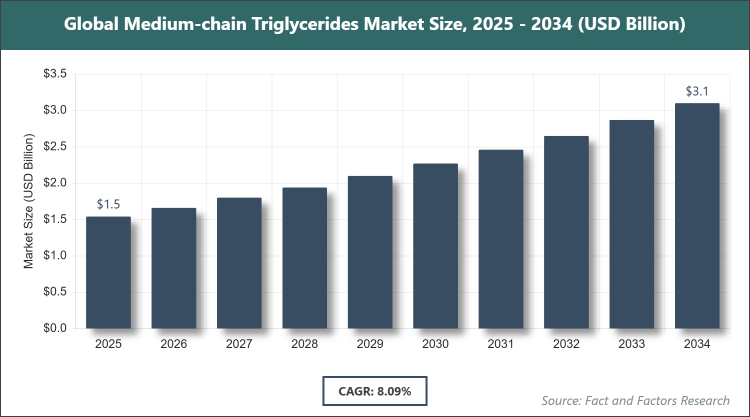
[250+ Pages Report] According to Facts & Factors, the global Medium-chain Triglycerides market size was estimated at USD 1.54 billion in 2025 and is expected to reach USD 3.11 billion by 2034, growing at a CAGR of 8.09% from 2026 to 2034. Medium-chain Triglycerides Market is driven by growing usage in sports nutrition and rising adoption of ketogenic diets.
 Market Overview
Medium-chain triglycerides (MCTs) are fats consisting of medium-length chains of fatty acids, typically containing between 6 and 12 carbon atoms, and are primarily sourced from natural oils such as coconut or palm kernel. These triglycerides are distinguished by their rapid digestion and absorption in the human body, bypassing the usual fat metabolism pathways to provide quick energy directly to the liver, making them a popular choice in nutritional and health-focused products. Unlike long-chain triglycerides, MCTs are less likely to be stored as body fat and are often utilized in formulations aimed at supporting metabolic health, weight management, and enhanced physical performance without the digestive burden associated with other fats.
Key Insights
- The Medium-chain Triglycerides market was valued at USD 1.54 Billion in 2025 and is projected to reach USD 3.11 Billion by the end of 2034.
- The market is expected to grow at a CAGR of 8.09% between 2026 and 2034.
- The Medium-chain Triglycerides market is driven by growing usage in sports nutrition and rising adoption of ketogenic diets.
- Based on the Form segment, the Liquid subsegment dominated the market in 2025 with a share of 77.10% because of its ease of blending into foods and beverages, providing versatile applications across various industries.
- Based on the Source segment, the Coconut Oil subsegment dominated the market in 2025 with a share of 75.60% because it is abundant, cost-effective, and aligns with consumer preferences for natural and clean-label ingredients.
- Based on the Fatty Acid Type segment, the Caprylic Acid subsegment dominated the market in 2025 with a share of 65.30% because it offers rapid energy release and is highly favored in ketogenic and performance nutrition products.
- Based on the Application segment, the Food and Beverage subsegment dominated the market in 2025 with a share of 45.95% because of its widespread use in functional foods, infant formulas, and beverages to enhance nutritional profiles.
- North America held the largest market share of 37.90% in 2025 due to high health awareness, strong demand for sports nutrition, and favorable regulatory environment.
Growth Drivers
- Growing Usage in Sports and Performance Nutrition
The increasing incorporation of MCTs in sports nutrition products has significantly propelled market growth, as athletes and fitness enthusiasts seek efficient energy sources that support endurance and recovery without gastrointestinal discomfort.
This trend is fueled by the rising popularity of high-performance supplements, where MCTs provide a quick metabolic boost, enhancing overall athletic performance and aligning with the global surge in active lifestyles and gym culture.
- Rising Adoption of Ketogenic and Low-Carb Diets
The proliferation of ketogenic diets, which emphasize high-fat, low-carbohydrate intake, has boosted demand for MCTs as they facilitate ketosis by providing readily available ketones for energy.
This driver is supported by growing consumer awareness of metabolic health benefits, including weight management and cognitive enhancement, driving integration into everyday dietary routines and functional foods.
- Expansion in Personal Care and Cosmetics Applications
MCTs are increasingly used in cosmetics for their lightweight texture, non-greasy feel, and skin-conditioning properties, appealing to clean beauty trends.
This expansion is driven by the beauty industry's shift toward natural ingredients, where MCTs enhance product efficacy in moisturizers, hair care, and makeup, contributing to sustained market growth.
Restraints
- Volatile Coconut and Palm Kernel Oil Prices
Fluctuations in raw material prices, influenced by weather events and supply chain disruptions, pose a significant restraint by increasing production costs and affecting profit margins for manufacturers.
This volatility challenges market stability, as producers struggle to maintain consistent pricing, potentially deterring smaller players and slowing adoption in price-sensitive regions.
- Availability of Alternative Functional Lipids
The presence of competing lipids, such as omega-3s and structured fats, limits MCT market penetration by offering similar benefits at potentially lower costs or with added health claims.
This restraint is exacerbated by ongoing innovations in alternative ingredients, which divert consumer and industry attention, impacting MCT demand in overlapping applications like supplements and foods.
Opportunities
- Source Diversification into Certified Palm Kernel Oil
Opportunities arise from diversifying sources to include sustainably certified palm kernel oil, reducing dependency on coconut and mitigating price risks while appealing to eco-conscious consumers.
This shift enables companies to tap into growing ESG demands, expanding market access in regions emphasizing sustainable sourcing and potentially unlocking premium pricing segments.
- Technology Investments in Purity Upgrades
Advancements in fractional distillation and blending technologies offer opportunities to create high-purity, customized MCT products tailored for specific applications like pharmaceuticals.
These innovations can enhance product differentiation, fostering growth in high-margin sectors and addressing unmet needs in clinical nutrition and drug delivery systems.
Challenges
- Climate-Related Supply Shocks
Environmental factors, such as droughts and storms affecting coconut and palm plantations, present challenges by disrupting supply chains and causing shortages.
This leads to inconsistent availability, compelling manufacturers to seek alternative suppliers or face production delays, which can hinder market expansion in fast-growing segments.
- Regulatory Compliance Costs
Stringent regulations, including EU deforestation rules for palm sourcing, increase compliance expenses and complicate international trade. These challenges require investments in certification and traceability, potentially straining resources for smaller firms and slowing entry into regulated markets like Europe.
Report Scope
Report Attribute |
Details |
Market Size in 2025 |
USD 1.54 Billion |
Projected Market Size in 2034 |
USD 3.11 Billion |
CAGR Growth Rate |
8.09% CAGR |
Base Year |
2025 |
Forecast Years |
2026-2034 |
Key Market Players |
Croda International Plc, IOI Oleo GmbH, KLK Oleo, Musim Mas Group, Stepan Company, AAK AB, ABITEC, Acme-Hardesty, Barlean's Organic Oils, LLC, BASF SE, ConnOils, CREMER OLEO GmbH & Co. KG, Henry Lamotte Oils GmbH, Jarrow Formulas Inc., Kerry Group plc, Oleon NV, Sternchemie GmbH & Co. KG, The Nisshin OilliO Group Ltd., Vitaflo International Ltd., Wilmar International Ltd., and Others. |
Key Segment |
By Form, By Source, By Fatty Acid Type, By Application, and By Region |
Major Regions Covered |
North America, Europe, Asia Pacific, Latin America, and the Middle East &, Africa |
Purchase Options |
Request customized purchase options to meet your research needs. Explore purchase options |
Market Segmentation
The Medium-chain Triglycerides market is segmented by type, application, end-user, and region.
Based on Form Segment, the Medium-chain Triglycerides market is divided into Liquid and Dry. The most dominant segment is Liquid, holding 77.10% share, due to its superior versatility in blending with liquids and ease of incorporation into beverages, supplements, and cosmetics, driving market growth through enhanced consumer convenience and product innovation; the second most dominant is Dry, which supports market expansion by enabling use in powdered formulations like protein shakes and infant formulas, offering stability and extended shelf life that cater to on-the-go nutrition trends.
Based on Source Segment, the Medium-chain Triglycerides market is divided into Coconut Oil, Palm Kernel Oil, and Others. The most dominant segment is Coconut Oil, with 75.60% share, owing to its natural abundance, clean-label appeal, and efficient extraction processes that lower costs while meeting consumer demand for plant-based ingredients, propelling overall market growth via widespread adoption in health-focused products; the second most dominant is Palm Kernel Oil, which contributes to market dynamics by providing a sustainable alternative with high yield potential, supporting diversification efforts and addressing supply volatility in key applications.
Based on Fatty Acid Type Segment, the Medium-chain Triglycerides market is divided into Caprylic Acid, Capric Acid, Lauric Acid, and Caproic Acid. The most dominant segment is Caprylic Acid, capturing 65.30% share, because of its rapid metabolism and efficacy in promoting ketosis, making it essential in sports nutrition and weight management products that fuel market expansion; the second most dominant is Capric Acid, which aids market growth by offering balanced energy release and antimicrobial properties, enhancing its use in pharmaceuticals and cosmetics for improved formulation stability.
Based on Application Segment, the Medium-chain Triglycerides market is divided into Food and Beverage, Personal Care and Cosmetics, and Other Applications. The most dominant segment is Food and Beverage, with 45.95% share, driven by its role in fortifying functional foods, infant formulas, and beverages with quick energy and nutritional benefits, accelerating market growth amid rising health consciousness; the second most dominant is Personal Care and Cosmetics, which boosts the market through its emollient properties that improve product texture and skin absorption, aligning with trends in natural beauty solutions.
Recent Developments
- In February 2025, a multi-institutional research team led by Osaka University discovered that tricaprin, a natural supplement derived from medium-chain triglycerides, significantly improves long-term survival in patients with triglyceride deposit cardiomyovasculopathy (TGCV), highlighting MCTs' potential in treating rare heart diseases.
- In June 2024, BASF SE entered into a distribution agreement with Azelis in China to expand the distribution of its range of Medium Chain Triglycerides (MCT) and related functional nutrition ingredients to food, bakery, beverage, and nutrition customers, reinforcing market reach in the Asia Pacific.
- In 2024, Musim Mas Holdings expanded its MCT production capacity, adding over 250,000 metric tons annually to strengthen the global supply of both liquid and powdered MCT oils for dietary supplements and food applications.
- In February 2025, researchers developed a validated UPLC-ELSD method to quantify medium-chain triglycerides (MCTs) in Labrafac™ WL 1349, a key excipient for nanoemulsion drug delivery, advancing analytical techniques in pharmaceutical formulations.
Regional Analysis
- North America to dominate the global market
North America dominates the Medium-chain Triglycerides market with a 37.90% share, primarily due to high consumer health awareness, widespread adoption of ketogenic diets, and a robust sports nutrition industry; the United States leads within the region, driven by innovative product launches, FDA GRAS approvals facilitating easy market entry, and strong demand for functional supplements in urban centers like California and New York, where fitness trends and e-commerce platforms amplify consumption.
Asia-Pacific is the fastest-growing region, propelled by rising urbanization, increasing disposable incomes, and demand for premium infant formulas; China dominates here, with its massive population and government initiatives promoting nutritional health, leading to expanded domestic production and imports of MCTs for food and cosmetics, while India contributes through growing awareness of metabolic benefits in metropolitan areas like Mumbai and Delhi.
Europe exhibits steady growth, focused on high-purity MCTs for cosmeceuticals and drug delivery, supported by stringent regulations; Germany is the leading country, leveraging advanced technology in fractional distillation and sustainable sourcing, with cities like Hamburg hosting innovation hubs that drive exports and compliance with EU standards on deforestation-free palm oil.
South America shows potential through sports nutrition and alternative crop plantations; Brazil dominates, with its vibrant fitness culture in Sao Paulo and Rio de Janeiro fueling MCT use in supplements, alongside emerging macauba oil sources that reduce reliance on imports and support local economies.
The Middle East and Africa remain nascent but promising for medical nutrition and halal-certified products; South Africa leads in Africa with growing urban health trends, while in the Middle East, the UAE drives adoption through luxury cosmetics and wellness tourism in Dubai, emphasizing clean-label MCTs in regional formulations.
Competitive Analysis
The global Medium-chain Triglycerides market is dominated by players:
- Croda International Plc
- IOI Oleo GmbH
- KLK Oleo
- Musim Mas Group
- Stepan Company
- AAK AB
- ABITEC
- Acme-Hardesty
- Barlean's Organic Oils, LLC
- BASF SE
- ConnOils
- CREMER OLEO GmbH & Co. KG
- Henry Lamotte Oils GmbH
- Jarrow Formulas Inc.
- Kerry Group plc
- Oleon NV
- Sternchemie GmbH & Co. KG
- The Nisshin OilliO Group Ltd.
- Vitaflo International Ltd.
- Wilmar International Ltd.
The global Medium-chain Triglycerides market is segmented as follows:
By Form
- Liquid
- Dry
By Source
- Coconut Oil
- Palm Kernel Oil
- Others
By Fatty Acid Type
- Caprylic Acid
- Capric Acid
- Lauric Acid
- Caproic Acid
By Application
- Food and Beverage
- Personal Care and Cosmetics
- Other Applications
By Region
-
North America
- The U.S.
- Canada
- Mexico
- Europe
- France
- The UK
- Spain
- Germany
- Italy
- Rest of Europe
- Asia Pacific
- China
- Japan
- India
- Australia
- Southeast Asia
- Rest of Asia Pacific
- The Middle East & Africa
- Saudi Arabia
- UAE
- Egypt
- Kuwait
- South Africa
- Rest of the Middle East & Africa
- Latin America
- Brazil
- Argentina
- Rest of Latin America
Table of Content
Industry Major Market Players



Copyright © 2025 - 2026, All Rights Reserved, Facts and Factors