
Search Market Research Report
Hand Knitting Market Size, Share Global Analysis Report, 2026-2034

Hand Knitting Market Size, Share, Growth Analysis Report By Type (Clothing, Blankets, and Others), By End-User (18-34 Years Old, 35-54 Years Old, 55+ Years Old), and By Region - Global Industry Insights, Overview, Comprehensive Analysis, Trends, Statistical Research, Market Intelligence, Historical Data and Forecast 2026-2034
Industry Insights
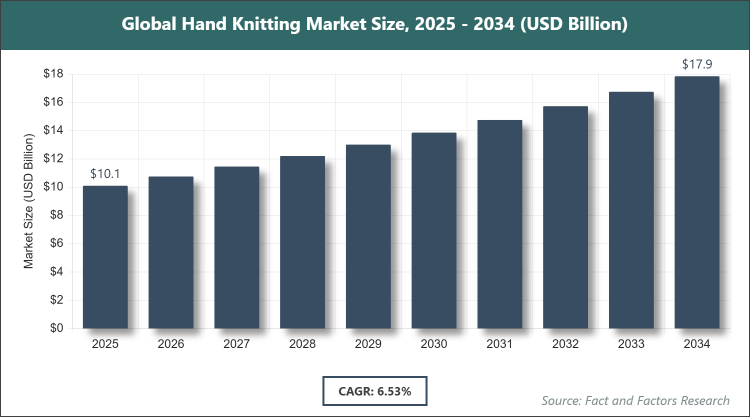
[235+ Pages Report] According to Facts & Factors, the global Hand Knitting market size was estimated at USD 10.1 billion in 2025 and is expected to reach USD 17.85 billion by the end of 2034. The Hand Knitting industry is anticipated to grow by a CAGR of 6.53% between 2026 and 2034. The Hand Knitting Market is driven by rising popularity of DIY crafts and sustainable materials.
 Market Overview
The hand knitting market refers to the industry encompassing the creation of textiles and garments through manual interlocking of yarn loops using needles, distinguished from machine knitting by its artisanal nature and emphasis on craftsmanship. This market includes a variety of products such as apparel, home decor items, and accessories, appealing to hobbyists, professional crafters, and consumers seeking unique, personalized items that often incorporate sustainable and eco-friendly materials.
Key Insights
- As per the analysis shared by our research analyst, the Hand Knitting market is estimated to grow annually at a CAGR of around 6.53% over the forecast period (2026-2034).
- In terms of revenue, the Hand Knitting market size was valued at around USD 10.1 Billion in 2025 and is expected to reach USD 17.85 Billion by 2034.
- The Hand Knitting market is driven by increasing adoption of eco-friendly yarns and expanding DIY culture.
- Based on the Type, the Clothing segment dominated with 45% share because of strong demand in fashion and sustainable apparel preferences.
- Based on the End-User, the 18–34 Years Old segment dominated with 39% share due to youth engagement in DIY trends and digital learning communities.
- Based on the Region, Asia Pacific dominated with 34% share because of large population bases and growing middle-class interest in handmade products in countries like China and India.
Growth Drivers
- Rising Popularity of Sustainable Fibers
The hand knitting market is propelled by a surge in consumer preference for eco-friendly and organic yarns, as environmental awareness encourages shifts away from synthetic materials toward natural alternatives like organic cotton and recycled fibers. This trend is particularly evident in developed regions where sustainability certifications influence purchasing decisions, leading to increased sales of premium, ethically sourced products. As brands respond with innovative sustainable offerings, this driver fosters market growth by attracting environmentally conscious consumers and expanding product portfolios.
Moreover, collaborations between yarn manufacturers and eco-initiatives have lowered production costs for green materials, making them more accessible and driving adoption across diverse demographics. This not only enhances market penetration but also supports long-term expansion by aligning with global sustainability goals, ultimately boosting revenue through higher-value sales and brand loyalty.
- Expanding DIY and Handmade Culture
The resurgence of do-it-yourself activities, fueled by social media platforms showcasing creative projects, has significantly boosted demand for hand knitting supplies and patterns. This cultural shift emphasizes personalization and skill-building, appealing to millennials and Gen Z who view crafting as a form of self-expression and relaxation. As online tutorials and communities proliferate, this driver accelerates market growth by increasing participation rates and repeat purchases.
In addition, government and community programs promoting artisanal skills in emerging markets have integrated hand knitting into educational and therapeutic contexts, broadening its appeal. This expansion diversifies the consumer base, stimulates innovation in beginner-friendly kits, and contributes to sustained market vitality through enhanced engagement and word-of-mouth promotion.
Restraints
- High Competition from Mass-Produced Goods
The market faces challenges from the prevalence of affordable, machine-made textiles that offer similar aesthetics at lower prices, deterring price-sensitive consumers from investing in hand-knitted items. This competition is intensified by fast-fashion retailers flooding the market with ready-to-wear options, reducing the perceived value of handmade craftsmanship. Such dynamics limit market share in budget-conscious segments, slowing overall growth.
Furthermore, supply chain inefficiencies in sourcing quality yarns exacerbate cost issues, making hand knitting less competitive in mass markets. This restraint necessitates strategic marketing to highlight unique qualities like customization, but until broader consumer education shifts preferences, it continues to cap expansion potential.
- Price Sensitivity Among Buyers
Economic fluctuations and varying disposable incomes make consumers hesitant to spend on non-essential crafting supplies, particularly in developing regions where basic needs take precedence. This sensitivity leads to deferred purchases or shifts to cheaper alternatives, impacting sales volumes for premium products. The restraint is compounded by inflation affecting raw material costs, further straining affordability.
Additionally, limited awareness of the long-term value of quality hand-knitted goods perpetuates this issue, requiring targeted campaigns to educate buyers. Without addressing these economic barriers, the market's growth remains tempered, especially in volatile global conditions.
Opportunities
- Investment in Eco-Friendly Yarns and Digital Platforms
Opportunities arise from increasing investments in sustainable yarn production and e-commerce platforms, enabling global reach for niche products and virtual workshops. This allows small artisans to access wider audiences, capitalizing on the digital shift in consumer shopping habits. As online sales grow, this opportunity drives market expansion through diversified channels and innovative marketing.
Moreover, partnerships with tech firms for augmented reality pattern previews can enhance user experience, attracting tech-savvy demographics. This forward-thinking approach positions the market for robust growth by leveraging digital tools to overcome geographical limitations and foster community-driven innovation.
- Regional Expansion in Emerging Markets
Emerging economies offer untapped potential through rising urbanization and interest in Western crafting trends, where local adaptations can blend traditional techniques with modern designs. Government support for artisanal sectors in these regions provides incentives for skill development, opening doors for market entry. This opportunity is enhanced by cultural festivals promoting handmade goods, boosting visibility.
In parallel, supply chain localization reduces costs, making products more competitive and supporting scalable growth. By capitalizing on these dynamics, the market can achieve significant penetration, driving revenue through volume increases and cultural integration.
Challenges
- Limited Skilled Workforce
A shortage of trained artisans and instructors hampers market growth, as younger generations prioritize other careers over traditional crafts. This challenge is acute in urban areas lacking vocational programs, leading to knowledge gaps and reduced innovation. Businesses struggle with talent acquisition, affecting production capacity and quality consistency.
Additionally, aging demographics in skilled communities exacerbate the issue, requiring urgent investment in training initiatives. Until resolved, this challenge risks stagnating the market, particularly in regions dependent on handmade authenticity.
- Limited Scaling Capacity for Small Manufacturers
Small-scale producers face difficulties in scaling operations due to capital constraints and fragmented supply chains, limiting their ability to meet growing demand. This challenge is pronounced in artisanal-focused segments where mass production contradicts core values, restricting market reach. Economic pressures further hinder expansion efforts.
Moreover, regulatory hurdles in international trade add complexity, slowing global distribution. Addressing this requires access to funding and technology, but persistent limitations threaten to confine growth to niche markets without broader accessibility.
Report Scope
Report Attribute |
Details |
Market Size 2025 |
USD 10.1 Billion |
Projected Market Size in 2034 |
USD 17.85 Billion |
CAGR Growth Rate |
6.53% CAGR |
Base Year |
2025 |
Forecast Years |
2026-2034 |
Key Market Players |
Lion Brand Yarns, Red Heart Yarns, Brooklyn Tweed, Made in America Yarns, Mountain Meadow Wool, Imperial Yarn, Cestari Sheep, Organic Cotton Plus, and Others. |
Key Segment |
By Type, By End-User, and By Region |
Major Regions Covered |
North America, Europe, Asia Pacific, Latin America, and the Middle East & Africa |
Purchase Options |
Request customized purchase options to meet your research needs. Explore purchase options |
Market Segmentation
The Hand Knitting market is segmented by type, end-user, and region.
Based on Type Segment, the Hand Knitting market is divided into Clothing, Blankets, and others.
The Clothing segment is the most dominant, holding approximately 45% market share, primarily due to its integration with fashion trends and consumer demand for sustainable, customizable apparel that allows for personal style expression. This dominance drives the overall market by leveraging social media influence and seasonal collections, which increase consumer engagement and boost sales volumes through higher perceived value and repeat purchases. The Blankets segment, as the second most dominant with around 32% share, caters to home comfort and gifting needs, favored for its versatility in textures and patterns; it contributes to market growth by tapping into interior decor trends, encouraging bulk buys and expanding into therapeutic and wellness applications.
Based on End-User Segment, the Hand Knitting market is divided into 18–34 Years Old, 35–54 Years Old, 55+ Years Old.
The 18–34 Years Old segment dominates with about 39% share, driven by millennial and Gen Z interest in DIY activities as a form of creative outlet and social media sharing, where accessible online resources make entry easy. This leadership propels market expansion by fostering innovation in trendy patterns and kits, attracting new entrants and sustaining growth through viral marketing and community building. The 35–54 Years Old segment, second dominant at roughly 36%, appeals to working professionals seeking stress-relief hobbies, valued for its therapeutic benefits; it supports market drive by increasing demand for premium materials, promoting subscriptions and workshops that enhance revenue stability.
Recent Developments
- In 2025, Lion Brand Yarns launched a new line of eco-friendly yarns made from recycled fibers, targeting sustainable consumers and expanding its online virtual workshops to engage younger demographics. This initiative highlights the company's commitment to innovation in response to growing environmental concerns.
- Red Heart Yarns introduced artisan collaborations in late 2024, featuring limited-edition kits with recycled materials, aimed at boosting sales in the clothing segment through unique patterns shared on social media. This development strengthens brand presence in the DIY community.
- Brooklyn Tweed announced partnerships with digital platforms in 2025 for augmented reality pattern previews, enhancing user experience and driving adoption among tech-savvy users in Europe and North America. This move is set to accelerate market penetration in online channels.
Regional Analysis
- Asia Pacific to dominate the global market
Asia Pacific leads the hand knitting market with its vast population and rising disposable incomes enabling greater access to crafting supplies, where countries like China and India blend traditional textile heritage with modern DIY trends. China's dominance stems from its robust manufacturing base for affordable yarns and accessories, supporting export growth and local consumption. The region's cultural emphasis on handmade goods during festivals fosters community workshops, enhancing skill transmission. Rapid urbanization introduces Western influences, boosting online platforms for patterns and materials. This dynamic positions Asia Pacific as a hub for innovation in sustainable fibers, driven by eco-conscious younger consumers.
North America holds a strong position, led by the United States with its enthusiastic crafting communities and high engagement in leisure activities, where e-commerce giants facilitate easy access to premium products. Canada's contribution arises from its focus on wool-based items suited to colder climates, promoting seasonal knitting events. The region's emphasis on wellness integrates hand knitting into therapy programs, attracting diverse age groups. Marketing through social media influencers amplifies trends, sustaining demand. Overall, North America's innovative retail strategies and subscription models ensure steady growth amid economic stability.
Europe maintains prominence, with Germany at the forefront due to its artisanal traditions and strong preference for organic materials, supporting a thriving market for high-quality yarns. The United Kingdom adds value through creative festivals and online communities that encourage participation across generations. France's fashion influence drives demand for clothing applications, blending couture with handmade elements. Regulatory support for sustainable practices enhances appeal, while cultural appreciation for heritage crafts preserves skills. This environment fosters collaborations between designers and crafters, positioning Europe for consistent expansion.
Latin America is emerging, spearheaded by Brazil with its vibrant cultural festivals incorporating hand-knitted elements into traditional attire and decor. Mexico contributes through its rich textile history, where local artisans produce colorful yarns for community markets. The region's warm climate favors lightweight materials, appealing to tourism-driven sales. Economic growth increases middle-class interest in hobbies, supported by affordable imports. Challenges like supply access are offset by grassroots initiatives, gradually building a dedicated market base.
The Middle East & Africa region shows potential, led by the United Arab Emirates with luxury retail integrating hand knitting into high-end fashion and home decor. South Africa's diverse communities use it for cultural expression and income generation through cooperatives. Saudi Arabia's growing interest stems from educational programs promoting crafts. Harsh climates influence material choices, favoring durable fibers. International aid supports skill development, enhancing economic empowerment and market integration.
Competitive Analysis
The global Hand Knitting market is dominated by players:
- Lion Brand Yarns
- Red Heart Yarns
- Brooklyn Tweed
- Made in America Yarns
- Mountain Meadow Wool
- Imperial Yarn
- Cestari Sheep
- Organic Cotton Plus
The global Hand Knitting market is segmented as follows:
By Type
- Clothing
- Blankets
- Others
By End-User
- 18–34 Years Old
- 35–54 Years Old
- 55+ Years Old
By Region
- North America
- The U.S.
- Canada
- Mexico
- Europe
- France
- The UK
- Spain
- Germany
- Italy
- Rest of Europe
- Asia Pacific
- China
- Japan
- India
- Australia
- Southeast Asia
- Rest of Asia Pacific
- The Middle East & Africa
- Saudi Arabia
- UAE
- Egypt
- Kuwait
- South Africa
- Rest of the Middle East & Africa
- Latin America
- Brazil
- Argentina
- Rest of Latin America
Table of Content
Industry Major Market Players
The global Hand Knitting market is dominated by players:
- Lion Brand Yarns
- Red Heart Yarns
- Brooklyn Tweed
- Made in America Yarns
- Mountain Meadow Wool
- Imperial Yarn
- Cestari Sheep
- Organic Cotton Plus



Copyright © 2025 - 2026, All Rights Reserved, Facts and Factors