
Search Market Research Report
Diabetic Foot Ulcers and Pressure Ulcers Market Size, Share Global Analysis Report, 2026-2034

Diabetic Foot Ulcers and Pressure Ulcers Market Size, Share, Growth Analysis Report By Type of Wound (Diabetic Foot Ulcer and Pressure Ulcer), By Treatment (Wound Care Dressings, Bio-Actives, Wound Care Devices, and Others), By End-User (Hospitals, Community Health Centers, Home Healthcare, and Others), and By Region - Global Industry Insights, Overview, Comprehensive Analysis, Trends, Statistical Research, Market Intelligence, Historical Data and Forecast 2026-2034
Industry Insights
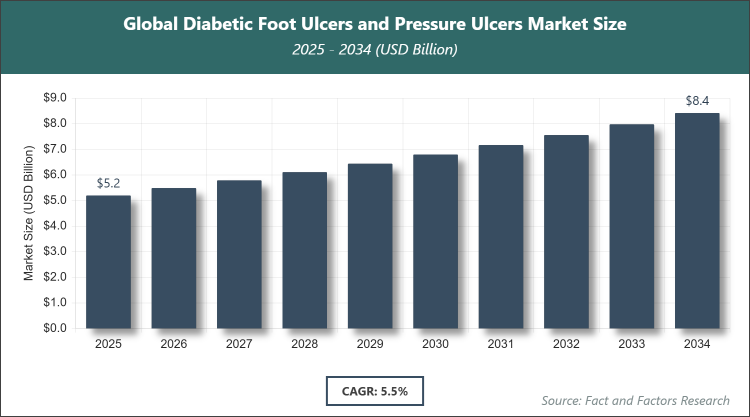
[235 + Pages Report] According to Facts & Factors, the global Diabetic Foot Ulcers and Pressure Ulcers market size was estimated at USD 5.2 billion in 2025 and is expected to reach USD 8.5 billion by the end of 2034. The Diabetic Foot Ulcers and Pressure Ulcers industry is anticipated to grow by a CAGR of 5.5% between 2026 and 2034. The Diabetic Foot Ulcers and Pressure Ulcers Market is driven by the increasing prevalence of diabetes and chronic wounds worldwide.
 Market Overview
The Diabetic Foot Ulcers and Pressure Ulcers market encompasses the diagnosis, treatment, and management of chronic wounds that commonly affect individuals with diabetes or those experiencing prolonged immobility. Diabetic foot ulcers are open sores or wounds that typically occur on the bottom of the foot in diabetic patients due to neuropathy, poor circulation, and high blood sugar levels, impairing healing. Pressure ulcers, also known as bedsores, develop from sustained pressure on the skin, often in bedridden or wheelchair-bound individuals, leading to tissue damage in areas like the heels, hips, and tailbone. This market includes a range of therapeutic interventions aimed at promoting wound healing, preventing infection, and reducing amputation risks through advanced dressings, devices, and biologics.
Key Insights
- As per the analysis shared by our research analyst, the Diabetic Foot Ulcers and Pressure Ulcers market is estimated to grow annually at a CAGR of around 5.5% over the forecast period (2026-2034).
- In terms of revenue, the Diabetic Foot Ulcers and Pressure Ulcers market size was valued at around USD 5.2 billion in 2025 and is projected to reach USD 8.5 billion by 2034.
- The Diabetic Foot Ulcers and Pressure Ulcers Market is driven by the increasing prevalence of diabetes and the aging population.
- Based on the Type of Wound, the Diabetic Foot Ulcer segment dominated the market in 2025 with a share of 62% due to the rising global incidence of diabetes leading to higher neuropathy and vascular complications.
- Based on the Treatment, the Wound Care Dressings segment dominated the market in 2025 with a share of 48%, owing to their cost-effectiveness, ease of use, and widespread adoption in both clinical and home settings for moisture management and infection control.
- Based on the End-User, the Hospitals segment dominated the market in 2025 with a share of 52% because of advanced facilities for surgical interventions, multidisciplinary care teams, and handling of severe cases requiring inpatient treatment.
- North America dominated the global Diabetic Foot Ulcers and Pressure Ulcers market in 2025 with a share of 38%, attributed to high diabetes prevalence, advanced healthcare infrastructure, and favorable reimbursement policies.
Growth Drivers
- Rising Prevalence of Diabetes and Obesity
The escalating global burden of diabetes significantly propels the market, as uncontrolled blood sugar levels contribute to neuropathy and impaired wound healing, increasing the incidence of foot ulcers. Obesity exacerbates this by adding pressure on lower extremities and promoting vascular issues, further driving demand for specialized treatments.
Technological advancements in wound care, such as smart dressings that monitor pH and moisture, enhance healing outcomes and reduce hospital readmissions, fostering market expansion. Additionally, government initiatives for diabetes management and awareness campaigns encourage early intervention, boosting the adoption of preventive and therapeutic solutions.
Restraints
- High Cost of Advanced Wound Care Products
Premium biologics and devices like negative pressure wound therapy systems pose financial barriers, particularly in low-income regions, limiting accessibility and slowing market penetration. Reimbursement inconsistencies across healthcare systems further hinder widespread adoption among patients and providers.
Economic disparities amplify this issue, as out-of-pocket expenses deter timely treatment, leading to complications like amputations that increase overall healthcare costs. Regulatory hurdles for approving innovative therapies also delay market entry, constraining growth in cost-sensitive segments.
Opportunities
- Emerging Markets in Asia-Pacific
Rapid urbanization and improving healthcare access in countries like India and China present untapped potential, with rising diabetes rates creating demand for affordable wound care solutions tailored to local needs.
Collaborations between global players and regional manufacturers can introduce cost-effective innovations, while telemedicine integration enables remote monitoring, expanding reach in underserved areas. Government investments in chronic disease management programs further support market entry and growth.
Challenges
- Lack of Skilled Healthcare Professionals
Shortages in trained wound care specialists impede effective management, leading to suboptimal outcomes and higher complication rates in resource-limited settings.
Educational gaps in diabetes care exacerbate this, as primary providers may overlook early ulcer signs, delaying referrals. Infrastructure limitations in rural areas compound the issue, restricting access to specialized training and tools.
Report Scope
Report Attribute |
Details |
Market Size 2025 |
USD 5.2 Billion |
Projected Market Size in 2034 |
USD 8.5 Billion |
CAGR Growth Rate |
5.5% CAGR |
Base Year |
2025 |
Forecast Years |
2026-2034 |
Key Market Players |
3M Healthcare, Smith & Nephew Plc, Acelity L.P. Inc., ConvaTec, Inc., Molnlycke Health Care, Coloplast A/S, Medtronic Plc, B. Braun Melsungen AG, Organogenesis, Inc., Medline Industries, Inc |
Key Segment |
By Type of Wound, By Treatment, By End-User, and By Region |
Major Regions Covered |
North America, Europe, Asia Pacific, Latin America, and the Middle East & Africa |
Purchase Options |
Request customized purchase options to meet your research needs. Explore purchase options |
Market Segmentation
The Diabetic Foot Ulcers and Pressure Ulcers market is segmented by Type of Wound, Treatment, End-User, and region.
Based on the Type of Wound Segment, the Diabetic Foot Ulcers and Pressure Ulcers market is divided into diabetic foot ulcer and pressure ulcer. The most dominant segment is Diabetic Foot Ulcer, driven by the global surge in diabetes cases, which heightens neuropathy and circulatory risks, making it a primary focus for treatments. The second most dominant is Pressure Ulcer, fueled by an aging population and increased immobility in long-term care settings. Diabetic Foot Ulcers dominate due to their association with chronic diabetes management needs, driving innovation in targeted therapies like growth factors that accelerate healing and prevent amputations, thereby propelling overall market growth through higher demand for specialized products.
Based on Treatment Segment, the Diabetic Foot Ulcers and Pressure Ulcers market is divided into wound care dressings, bio-actives, wound care devices, and others. The most dominant segment is Wound Care Dressings, owing to their versatility in managing exudate and promoting a moist healing environment across various ulcer stages. The second most dominant is Bio-Actives, supported by advancements in growth factors and skin substitutes for complex wounds. Wound Care Dressings lead because of their affordability and broad applicability, aiding infection control and tissue regeneration, which drives market expansion by enabling outpatient care and reducing hospital stays.
Based on End-User Segment, the Diabetic Foot Ulcers and Pressure Ulcers market is divided into hospitals, community health centers, home healthcare, and others. The most dominant segment is Hospitals, as they handle severe cases requiring surgical debridement and advanced monitoring. The second most dominant is Home Healthcare, growing with the shift toward patient-centric care models. Hospitals dominate due to their comprehensive resources for multidisciplinary treatment, which enhances outcomes for high-risk patients and stimulates market growth through increased utilization of high-tech devices and biologics.
Recent Developments
- In April 2024, Smith+Nephew announced that the U.K. National Institute for Health and Care Excellence (NICE) reviewed the PICO Single Use Negative Pressure Wound Therapy System (sNPWT), finding it provides better clinical outcomes than standard dressings for reducing surgical site infection risks in wound care, including for ulcers.
- In January 2025, MolecuLight, Inc. raised $27.5 million in investment from Hayfin Capital Management LLP to accelerate growth in the U.S., Canada, and Europe, focusing on point-of-care fluorescence imaging for detecting bacterial load in wounds like diabetic foot ulcers.
- In October 2024, the Registered Nurses Association of Ontario (RNAO) released the latest edition of its best practice guidelines for Diabetic Foot Ulcers: Prevention, Assessment, and Management, emphasizing evidence-based approaches to improve patient outcomes in ulcer care.
- In May 2025, Smith+Nephew secured a USD 75 million Department of Defense contract for advanced wound therapy systems, expanding its footprint in military healthcare applications for treating ulcers and chronic wounds.
- In February 2025, the FDA granted breakthrough-therapy designation to SkinTE for Wagner grade 1 ulcers after Phase 2 trials showed 70% closure rates versus 34% in controls, advancing regenerative medicine for diabetic foot ulcers.
Regional Analysis
- North America to dominate the global market
North America leads the Diabetic Foot Ulcers and Pressure Ulcers market, driven by high diabetes prevalence, robust healthcare infrastructure, and strong reimbursement frameworks that facilitate access to advanced treatments. The region's focus on innovation, with numerous clinical trials and product launches, further solidifies its position. The United States dominates within North America, benefiting from a large patient pool, specialized wound care centers, and government initiatives like Medicare coverage for biologics, which enhance early detection and management, reducing complication rates and supporting sustained market leadership.
Europe holds a significant share in the Diabetic Foot Ulcers and Pressure Ulcers market, supported by an aging population and comprehensive public health systems emphasizing chronic wound prevention. Countries like Germany and the UK drive growth through research collaborations and the adoption of telemedicine for remote monitoring. Germany stands out as the dominant country, with its advanced medical technology sector and policies promoting multidisciplinary care teams, which improve healing outcomes and integrate innovative dressings and devices into standard protocols, fostering efficient market expansion.
The Asia-Pacific region is experiencing rapid growth in the Diabetic Foot Ulcers and Pressure Ulcers market, fueled by rising diabetes incidence amid urbanization and lifestyle changes. Improving healthcare access and awareness campaigns are key enablers. China dominates in this region, with its massive population and government investments in diabetes management programs, leading to increased adoption of affordable wound care solutions and partnerships with global players to introduce advanced therapies, accelerating market development.
Latin America is emerging in the Diabetic Foot Ulcers and Pressure Ulcers market, driven by increasing diabetes awareness and healthcare reforms. Brazil leads the region, with expanding public health initiatives and a growing middle class seeking better wound management options. Investments in training healthcare professionals and importing cost-effective dressings help address ulcer prevalence, promoting gradual market growth through enhanced prevention and treatment strategies.
The Middle East & Africa region shows potential in the Diabetic Foot Ulcers and Pressure Ulcers market, with growth spurred by rising chronic disease burdens and international aid for healthcare infrastructure. South Africa dominates, benefiting from urban healthcare facilities and NGO-supported diabetes programs that introduce basic wound care products, aiding in ulcer management and laying the foundation for future market advancements through education and accessibility improvements.
Competitive Analysis
The global Diabetic Foot Ulcers and Pressure Ulcers market is dominated by players:
- 3M Healthcare
- Smith & Nephew Plc
- Acelity L.P. Inc.
- ConvaTec, Inc.
- Molnlycke Health Care
- Coloplast A/S
- Medtronic Plc
- B. Braun Melsungen AG
- Organogenesis, Inc.
- Medline Industries, Inc.
The global Diabetic Foot Ulcers and Pressure Ulcers market is segmented as follows:
By Type of Wound
- Diabetic Foot Ulcer
- Pressure Ulcer
By Treatment
- Wound Care Dressings
- Bio-Actives
- Wound Care Devices
By End-User
- Hospitals
- Community Health Centers
- Home Healthcare
- Others
By Region
- North America
- The U.S.
- Canada
- Mexico
- Europe
- France
- The UK
- Spain
- Germany
- Italy
- Rest of Europe
- Asia Pacific
- China
- Japan
- India
- Australia
- Southeast Asia
- Rest of Asia Pacific
- The Middle East & Africa
- Saudi Arabia
- UAE
- Egypt
- Kuwait
- South Africa
- Rest of the Middle East & Africa
- Latin America
- Brazil
- Argentina
- Rest of Latin America
Table of Content
Industry Major Market Players
- 3M Healthcare
- Smith & Nephew Plc
- Acelity L.P. Inc.
- ConvaTec, Inc.
- Molnlycke Health Care
- Coloplast A/S
- Medtronic Plc
- B. Braun Melsungen AG
- Organogenesis, Inc.
- Medline Industries, Inc.



Copyright © 2025 - 2026, All Rights Reserved, Facts and Factors