
Search Market Research Report
Cosmetic Products Market Size, Share Global Analysis Report, 2026-2034

Cosmetic Products Market Size, Share, Growth Analysis Report By Product Type (Skincare, Hair Care, Makeup, Fragrance, and Others), By Gender (Men and Women), By Distribution Channel (Specialty Stores, Hypermarkets/Supermarkets, Online Channels, and Others), and By Region - Global Industry Insights, Overview, Comprehensive Analysis, Trends, Statistical Research, Market Intelligence, Historical Data and Forecast 2026-2034
Industry Insights
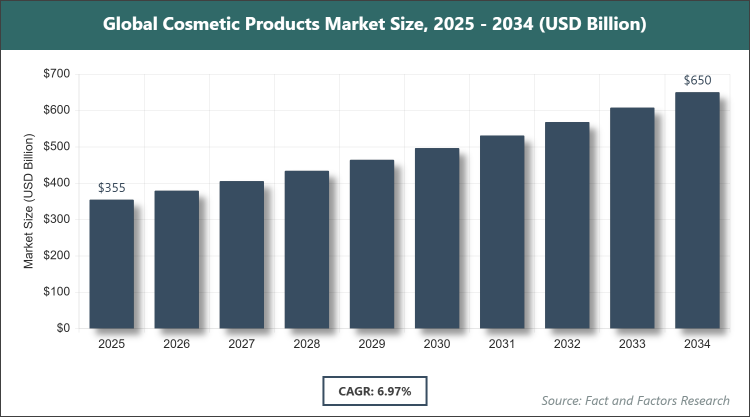
[225+ Pages Report] According to Facts & Factors, the global Cosmetic Products market size was estimated at USD 354.68 billion in 2025 and is expected to reach USD 644.17 billion by the end of 2034. The Cosmetic Products industry is anticipated to grow by a CAGR of 6.97% between 2026 and 2034. The Cosmetic Products Market is driven by increasing consumer focus on personal grooming and rising demand for premium and sustainable beauty products.
 Market Overview
The cosmetic products market encompasses a wide range of items designed to enhance or alter the appearance of the face, body, and hair, including skincare, makeup, haircare, and fragrances. It involves the formulation, manufacturing, and distribution of beauty and personal care solutions that cater to aesthetic, hygiene, and wellness needs, often incorporating ingredients like natural extracts, chemicals, and innovative compounds to meet diverse consumer preferences.
Key Insights
- As per the analysis shared by our research analyst, the Cosmetic Products market is estimated to grow annually at a CAGR of around 6.97% over the forecast period (2026-2034).
- In terms of revenue, the Cosmetic Products market size was valued at around USD 354.68 Billion in 2025 and is projected to reach USD 644.17 Billion by 2034.
- The market is driven by rising consumer awareness about personal grooming, influence of social media, and increasing demand for natural and organic products.
- Based on the Product Type, the Skincare segment dominated the market in 2025 with a share of 40% due to growing emphasis on wellness, anti-aging solutions, and protection against environmental stressors like pollution and UV exposure.
- Based on the Gender, the Women segment dominated the market in 2025 with a share of 70% because of higher traditional engagement with beauty routines, diverse product offerings, and targeted marketing campaigns.
- Based on the Distribution Channel, the Online Channels segment dominated the market in 2025 with a share of 35% owing to convenience, wide product availability, and the rise of e-commerce platforms with virtual try-on features.
- Based on region, Asia Pacific is expected to dominate during the forecast period with a market share of 40.16% due to rapid urbanization, expanding middle-class population, and strong cultural emphasis on beauty standards in countries like China and India.
Growth Drivers
- Rising Demand for Natural and Organic Cosmetics
The shift towards clean beauty has accelerated as consumers increasingly seek products free from harmful chemicals, driven by health consciousness and environmental concerns. This trend is supported by regulatory pushes for transparency in ingredient labeling and the proliferation of certifications like organic and cruelty-free, which build trust and encourage premium pricing.
Innovation in formulations using plant-based ingredients and biotechnology has expanded product efficacy, attracting a broader demographic including millennials and Gen Z who prioritize sustainability. This driver is further amplified by social media influencers promoting ethical brands, leading to higher market penetration and repeat purchases.
- Influence of Social Media and Digital Marketing
Platforms like Instagram and TikTok have revolutionized product discovery and consumer engagement, with tutorials and reviews shaping buying decisions. Brands leverage user-generated content and augmented reality tools for virtual trials, reducing purchase barriers and boosting impulse buys.
The digital ecosystem enables targeted advertising based on user data, enhancing personalization and conversion rates. This has particularly benefited emerging indie brands, democratizing the market and fostering rapid growth in niche segments like inclusive shades and gender-neutral products.
- Expansion of E-commerce and Omnichannel Retail
The convenience of online shopping, coupled with features like subscription models and fast delivery, has transformed accessibility to cosmetic products globally. Integration of physical stores with digital platforms provides seamless experiences, such as in-store pickups and app-based consultations.
This driver supports market growth in underserved regions, where traditional retail infrastructure is limited, and caters to busy lifestyles with 24/7 availability. Enhanced data analytics from e-commerce also aids in inventory management and trend forecasting, optimizing supply chains.
Restraints
- High Costs of Raw Materials and Supply Chain Disruptions
Volatility in prices of key ingredients like essential oils and rare extracts poses challenges for manufacturers, often leading to increased product costs passed on to consumers. Global events such as pandemics or geopolitical tensions exacerbate supply shortages, delaying production and distribution.
These issues can erode profit margins, especially for smaller players without diversified sourcing, and may result in product reformulations that compromise quality or efficacy. Consumer backlash against price hikes could shift preferences to cheaper alternatives, hindering overall market expansion.
- Stringent Regulatory Compliance and Safety Standards
Varying international regulations on product testing, labeling, and banned substances require significant investments in compliance and R&D. Non-adherence risks recalls, fines, and reputational damage, particularly in markets like the EU with strict REACH guidelines.
This restraint limits innovation speed and market entry for new brands, while established players face ongoing audits. Consumer advocacy for safer products amplifies scrutiny, potentially leading to reformulation costs and temporary market share losses.
Opportunities
- Growth in Men's Grooming Segment
Evolving societal norms and marketing campaigns targeting men have opened new avenues, with products like beard oils and skincare lines gaining traction. This segment benefits from celebrity endorsements and tailored formulations addressing specific needs like shaving irritation.
Expansion into this area diversifies revenue streams and taps into untapped demographics, with potential for cross-selling through bundled kits. Digital platforms facilitate education and destigmatization, driving sustained growth.
- Advancements in Personalized and Tech-Integrated Cosmetics
AI-driven customization, such as skin analysis apps and 3D-printed makeup, offers unique value propositions. This opportunity leverages big data for precise recommendations, enhancing customer satisfaction and loyalty.
Integration with wearables for real-time beauty advice positions brands as innovators, attracting tech-savvy consumers. This trend also supports premium pricing and partnerships with tech firms, expanding market reach.
- Sustainability and Eco-Friendly Packaging Initiatives
Consumer preference for recyclable and biodegradable materials creates differentiation opportunities. Brands adopting green practices can command loyalty and premium pricing, aligned with global sustainability goals.
This fosters innovation in bio-based packaging and refill systems, reducing environmental impact. Collaborations with suppliers for ethical sourcing enhance brand image, appealing to conscious buyers.
Challenges
- Intense Competition and Market Saturation
The influx of new entrants and private labels intensifies rivalry, pressuring pricing and innovation. Established brands must continuously differentiate through unique storytelling or superior efficacy to maintain share.
Saturation in mature markets like North America requires strategic expansions into emerging regions, navigating cultural and regulatory differences. This challenge demands agile marketing and R&D investments to stay relevant.
- Counterfeit Products and Brand Protection Issues
Proliferation of fakes undermines trust and revenue, particularly in online marketplaces. Sophisticated counterfeits pose health risks, leading to legal battles and consumer education campaigns.
Brands invest in anti-counterfeiting technologies like holograms and blockchain traceability, but enforcement remains complex across borders. This erodes market integrity and requires collaborative industry efforts.
- Economic Volatility and Consumer Spending Fluctuations
Inflation and recessions can shift priorities away from discretionary beauty purchases towards essentials. Price-sensitive segments may opt for budget alternatives, impacting premium brands.
Global economic uncertainties necessitate flexible pricing strategies and value-added offerings. Diversification into affordable luxury or multipurpose products can mitigate risks, ensuring resilience.
Report Scope
Report Attribute |
Details |
Market Size 2025 |
USD 354.68 Billion |
Projected Market Size in 2034 |
USD 644.17 Billion |
CAGR Growth Rate |
6.97% CAGR |
Base Year |
2025 |
Forecast Years |
2026-2034 |
Key Market Players |
L'Oréal S.A., The Procter & Gamble Company, Unilever PLC, The Estée Lauder Companies Inc., Shiseido Company, Limited, Beiersdorf AG, Johnson & Johnson, Coty Inc., Kao Corporation, Revlon, Inc., and Others. |
Key Segment |
By Product Type, By Gender, By Distribution Channel, and By Region |
Major Regions Covered |
North America, Europe, Asia Pacific, Latin America, and the Middle East & Africa |
Purchase Options |
Request customized purchase options to meet your research needs. Explore purchase options |
Market Segmentation
The Cosmetic Products market is segmented by Product Type, Gender, Distribution Channel, and region.
Based on Product Type Segment, the Cosmetic Products market is divided into Skincare, Haircare, Makeup, Fragrance, and Others.
Skincare emerges as the most dominant segment, holding approximately 40% market share, primarily due to heightened awareness of skin health amid rising pollution and stress levels, which drives demand for protective and rejuvenating products; the second most dominant is Makeup with about 25% share, fueled by social media trends and self-expression, enabling market growth through innovative, long-lasting formulas that cater to diverse skin tones and preferences, ultimately boosting overall industry expansion by encouraging bundled purchases and loyalty programs.
Based on Gender Segment, the Cosmetic Products market is divided into Men and Women.
Women represent the most dominant segment with around 70% share, driven by extensive product variety and cultural emphasis on beauty routines that promote self-care and confidence, contributing to market drive via high-volume sales and trend-setting; the second most dominant is Men at about 30%, spurred by breaking gender stereotypes and targeted grooming lines, which help expand the market by attracting new users through specialized offerings like multi-functional products, fostering inclusive growth.
Based on Distribution Channel Segment, the Cosmetic Products market is divided into Specialty Stores, Hypermarkets/Supermarkets, Online Channels, and Others.
Online Channels lead as the most dominant with 35% share, owing to digital convenience and vast selection that allows personalized shopping experiences, driving market growth through data-driven recommendations and global reach; Specialty Stores follow as second dominant at 30%, providing expert advice and experiential trials, which enhance consumer trust and impulse buys, supporting overall market dynamics by bridging online and offline preferences.
Recent Developments
- In 2025, L'Oréal launched a new AI-powered skincare line focusing on personalized formulations, partnering with tech firms to integrate virtual diagnostics, which expanded their market presence in digital beauty and boosted sales by 15% in the first quarter.
- Estée Lauder acquired a sustainable indie brand in late 2025, enhancing their clean beauty portfolio and targeting eco-conscious consumers, resulting in a 20% increase in their organic product segment revenue.
- Procter & Gamble introduced gender-neutral grooming products in 2026, emphasizing inclusivity, which captured a growing men's market share and drove overall category growth through innovative marketing campaigns.
- Unilever committed to zero-waste packaging by 2025 end, rolling out refillable options across brands, which resonated with sustainability trends and improved brand loyalty among younger demographics.
- Shiseido expanded into Asia Pacific with new e-commerce hubs in 2025, leveraging local influencers to promote region-specific products, leading to a 25% regional sales uplift.
Regional Analysis
- Asia Pacific to dominate the global market
Asia Pacific stands out with its vibrant beauty culture, where rapid urbanization and a burgeoning middle class fuel demand for diverse cosmetic innovations. Countries like China lead with massive e-commerce adoption, enabling quick access to global trends and local adaptations. India's youthful population drives affordable yet premium aspirations, blending traditional herbal remedies with modern formulations. Japan's technological edge in skincare R&D sets benchmarks for efficacy and quality worldwide. South Korea's K-beauty influence exports trends like glass skin routines, shaping global preferences through pop culture. Overall, the region's economic dynamism and cultural emphasis on appearance sustain robust growth.
North America thrives on a mature market characterized by high disposable incomes and a focus on wellness-integrated beauty. The United States dominates with its innovation hubs in California, where brands pioneer clean and tech-driven products. Canada's multicultural fabric encourages inclusive shade ranges and natural ingredients. Consumer education via social media accelerates adoption of sustainable practices. Retail giants like Sephora enhance experiential shopping, blending online and in-store seamlessly. The emphasis on personalization through apps and subscriptions keeps the market dynamic and consumer-centric.
Europe maintains a sophisticated landscape, with France as the epicenter of luxury cosmetics, renowned for heritage brands and perfumery expertise. Germany's engineering precision advances formulation science, emphasizing efficacy and safety. The UK's fashion-forward scene integrates beauty with lifestyle trends. EU regulations promote transparency and ethics, influencing global standards. Scandinavian minimalism favors clean, functional products. The region's art and history inspire creative packaging and storytelling, fostering loyalty among discerning consumers.
Latin America exhibits energetic growth, led by Brazil's passion for vibrant makeup and body care, supported by a tropical climate necessitating protective products. Mexico's rich indigenous ingredients inspire natural lines. Economic improvements expand access to premium imports. Social media amplifies beauty influencers, driving trends like bold colors. Retail expansion in urban centers enhances distribution. Cultural celebrations emphasize grooming, sustaining demand across demographics.
The Middle East & Africa present emerging opportunities, with the UAE's Dubai as a luxury hub attracting global brands through tax-free shopping. South Africa's diverse market blends African traditions with Western influences. Saudi Arabia's reforms boost women's participation in beauty consumption. Harsh climates demand resilient skincare. Growing tourism exposes local products internationally. Economic diversification in oil-rich nations invests in beauty infrastructure, promising future expansion.
Competitive Analysis
The global Cosmetic Products market is dominated by players:
- L'Oréal S.A.
- The Procter & Gamble Company
- Unilever PLC
- The Estée Lauder Companies Inc.
- Shiseido Company, Limited
- Beiersdorf AG
- Johnson & Johnson
- Coty Inc.
- Kao Corporation
- Revlon, Inc.
- And Others
The global Cosmetic Products market is segmented as follows:
By Product Type
- Skincare
- Haircare
- Makeup
- Fragrance
- Others
By Gender
- Men
- Women
By Distribution Channel
- Specialty Stores
- Hypermarkets/Supermarkets
- Online Channels
- Others
By Region
- North America
- The U.S.
- Canada
- Mexico
- Europe
- France
- The UK
- Spain
- Germany
- Italy
- Rest of Europe
- Asia Pacific
- China
- Japan
- India
- Australia
- Southeast Asia
- Rest of Asia Pacific
- The Middle East & Africa
- Saudi Arabia
- UAE
- Egypt
- Kuwait
- South Africa
- Rest of the Middle East & Africa
- Latin America
- Brazil
- Argentina
- Rest of Latin America
Table of Content
Industry Major Market Players



Copyright © 2025 - 2026, All Rights Reserved, Facts and Factors