
Search Market Research Report
Pruritus Therapeutics Market Size, Share Global Analysis Report, 2026-2034

Pruritus Therapeutics Market Size, Share, Growth Analysis Report By Drug Class (Corticosteroids, Antihistamines, Local Anesthetics, Immunosuppressant, Calcineurin Inhibitors, and Others), By Disease Type (Atopic Dermatitis, Allergic Contact Dermatitis, Urticaria, and Others), By End-User (Hospitals, Clinics, and Others), and By Region - Global Industry Insights, Overview, Comprehensive Analysis, Trends, Statistical Research, Market Intelligence, Historical Data and Forecast 2026-2034
Industry Insights
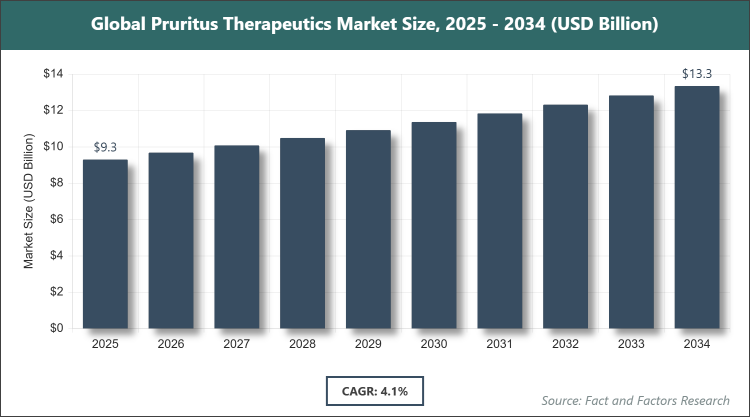
[230+ Pages Report] According to Facts & Factors, the global Pruritus Therapeutics market size was estimated at USD 9.3 billion in 2025 and is expected to reach USD 13.8 billion by the end of 2034. The Pruritus Therapeutics industry is anticipated to grow by a CAGR of 4.1% between 2026 and 2034. The Pruritus Therapeutics Market is driven by the increasing prevalence of dermatological disorders and advancements in biologic therapies.
 Market Overview
Pruritus Therapeutics encompasses pharmaceutical interventions designed to alleviate itching, a symptom associated with various skin conditions, systemic diseases, and neurological disorders, through mechanisms targeting histamine release, inflammation, or neural pathways. This market includes a range of treatments such as topical creams, oral medications, and injectables that address underlying causes like atopic dermatitis or urticaria, aiming to improve patient quality of life by reducing discomfort and preventing secondary complications like skin infections, without providing quantitative details.
Key Insights
- As per the analysis shared by our research analyst, the global Pruritus Therapeutics market is estimated to grow annually at a CAGR of around 4.1% over the forecast period (2026-2034).
- In terms of revenue, the global Pruritus Therapeutics market size was valued at around USD 9.3 billion in 2025 and is projected to reach USD 13.8 billion by 2034.
- The market is driven by the rising incidence of chronic skin conditions and innovative drug developments.
- Based on the drug class, the calcineurin inhibitors segment dominated with a 32% share due to their efficacy in treating inflammatory skin conditions without steroid side effects.
- Based on the disease type, the atopic dermatitis segment dominated with a 45% share owing to its high prevalence and association with severe itching.
- Based on the end-user, the hospitals segment dominated with a 50% share because of advanced treatment facilities and inpatient care for severe cases.
- Based on the region, North America dominated with a 40% share attributed to robust healthcare infrastructure and high R&D investments.
Growth Drivers
- Increasing Prevalence of Dermatological Disorders
The rising global incidence of conditions like atopic dermatitis and urticaria, driven by environmental factors, urbanization, and genetic predispositions, has amplified demand for effective pruritus treatments. This growth is further supported by aging populations more susceptible to chronic itching, prompting pharmaceutical innovations to address unmet needs.
Additionally, advancements in biologics and targeted therapies offer superior efficacy with fewer side effects, encouraging adoption and expanding market access through clinical validations and patient-centric approaches.
Restraints
- High Treatment Costs and Side Effects
Elevated prices of advanced biologics limit accessibility in developing regions, while potential adverse effects like immunosuppression deter long-term use. These factors constrain market penetration, particularly among low-income populations.
Moreover, stringent regulatory approvals delay new drug launches, increasing development costs and hindering timely availability of innovative solutions.
Opportunities
- Emergence of Novel Biologic Therapies
The development of IL-31 inhibitors and other targeted agents presents opportunities to capture untapped segments in chronic pruritus management. This aligns with personalized medicine trends, enhancing treatment outcomes.
Furthermore, expanding into emerging markets through partnerships and affordable generics can broaden reach, capitalizing on growing healthcare expenditures.
Challenges
- Limited Awareness and Diagnostic Issues
Underdiagnosis due to overlapping symptoms with other conditions challenges effective treatment, requiring education initiatives. This impacts market growth by delaying interventions.
In addition, resistance to conventional therapies necessitates continuous R&D, posing risks of pipeline failures and investment uncertainties.
Report Scope
Report Attribute |
Details |
Market Size 2025 |
USD 9.3 Billion |
Projected Market Size in 2034 |
USD 13.8 Billion |
CAGR Growth Rate |
4.1% CAGR |
Base Year |
2025 |
Forecast Years |
2026-2034 |
Key Market Players |
AbbVie Inc., Amgen Inc., Astellas Pharma Inc., Bristol-Myers Squibb, Cara Therapeutics, GSK plc, Novartis AG, Pfizer Inc., Sanofi, Eli Lilly and Company, and Others. |
Key Segment |
By Drug Class, By Disease Type, By End-User, and By Region |
Major Regions Covered |
North America, Europe, Asia Pacific, Latin America, and the Middle East & Africa |
Purchase Options |
Request customized purchase options to meet your research needs. Explore purchase options |
Market Segmentation
The Pruritus Therapeutics market is segmented by drug class, disease type, end-user, and region.
Based on Drug Class Segment, the Pruritus Therapeutics market is divided into corticosteroids, antihistamines, local anesthetics, immunosuppressant, calcineurin inhibitors, and others. The most dominant segment is calcineurin inhibitors, followed by corticosteroids as the second most dominant. Calcineurin inhibitors dominate due to their steroid-sparing properties and effectiveness in managing chronic inflammatory itching without atrophy risks, driving the market by offering safer long-term options for conditions like atopic dermatitis; corticosteroids, with rapid symptom relief, support growth by serving as first-line treatments in acute cases, enhancing patient compliance and market demand.
Based on Disease Type Segment, the Pruritus Therapeutics market is divided into atopic dermatitis, allergic contact dermatitis, urticaria, and others. The most dominant segment is atopic dermatitis, followed by urticaria as the second most dominant. Atopic dermatitis leads to its widespread occurrence and association with persistent pruritus, propelling market expansion through demand for specialized therapies; urticaria, characterized by acute hives and itching, drives growth by requiring antihistamine-based interventions, expanding treatment accessibility.
Based on the end-user segment, the Pruritus Therapeutics market is divided into hospitals, clinics, and others. The most dominant segment is hospitals, followed by clinics as the second most dominant. Hospitals dominate as they handle severe and systemic pruritus cases with advanced diagnostics and biologics, boosting the market via comprehensive care; clinics, focusing on outpatient management, contribute to growth by providing convenient access to topical and oral therapies.
Recent Developments
- In June 2025, Galderma announced two-year data from long-term nemolizumab studies demonstrating sustained efficacy and a favorable safety profile in treating pruritus.
- In December 2024, the FDA approved nemolizumab (Nemluvio) for moderate-to-severe atopic dermatitis, expanding options for pruritus management.
- In September 2024, Organon completed the acquisition of Dermavant, including VTAMA cream, enhancing its dermatology portfolio for pruritus-related conditions.
- In November 2024, the FDA accepted an sBLA for Dupixent to treat chronic spontaneous urticaria, with a decision expected in 2025.
Regional Analysis
- North America to Dominate the Global Market
North America dominates the Pruritus Therapeutics market, led by the United States, where advanced healthcare systems, high prevalence of allergic conditions, and strong pharmaceutical R&D foster innovation in biologics and targeted therapies, supported by favorable reimbursement policies that enhance patient access and drive clinical advancements.
Europe holds a significant position, with Germany leading through robust regulatory frameworks and a focus on dermatological research, integrating novel treatments into national health systems to address chronic pruritus amid aging populations and environmental allergens.
Asia Pacific is rapidly growing, dominated by China, fueled by urbanization increasing skin disorder incidences, expanding middle-class healthcare spending, and government initiatives promoting biotech investments for affordable therapeutics.
Latin America shows steady progress, led by Brazil, through improving medical infrastructure and rising awareness of pruritus management, enabling adoption of generics and biologics in diverse socioeconomic settings.
The Middle East & Africa region is emerging, with South Africa at the forefront, driven by increasing chronic disease burdens and international collaborations introducing advanced treatments to underserved areas.
Competitive Analysis
The global Pruritus Therapeutics market is dominated by players:
- AbbVie Inc.
- Amgen Inc.
- Astellas Pharma Inc.
- Bristol-Myers Squibb
- Cara Therapeutics
- GSK plc
- Novartis AG
- Pfizer Inc.
- Sanofi
- Eli Lilly and Company
- Others
The global Pruritus Therapeutics market is segmented as follows:
By Drug Class
- Corticosteroids
- Antihistamines
- Local Anesthetics
- Immunosuppressant
- Calcineurin Inhibitors
By Disease Type
- Atopic Dermatitis
- Allergic Contact Dermatitis
- Urticaria
By End-User
- Hospitals
- Clinics
By Region
- North America
- The U.S.
- Canada
- Mexico
- Europe
- France
- The UK
- Spain
- Germany
- Italy
- Rest of Europe
- Asia Pacific
- China
- Japan
- India
- Australia
- Southeast Asia
- Rest of Asia Pacific
- The Middle East & Africa
- Saudi Arabia
- UAE
- Egypt
- Kuwait
- South Africa
- Rest of the Middle East & Africa
- Latin America
- Brazil
- Argentina
- Rest of Latin America
Industry Major Market Players
- AbbVie Inc.
- Amgen Inc.
- Astellas Pharma Inc.
- Bristol-Myers Squibb
- Cara Therapeutics
- GSK plc
- Novartis AG
- Pfizer Inc.
- Sanofi
- Eli Lilly and Company



Copyright © 2025 - 2026, All Rights Reserved, Facts and Factors