
Search Market Research Report
Dental Implants Market Size, Share Global Analysis Report, 2026-2034

Dental Implants Market Size, Share, Growth Analysis Report By Type (Endosteal Implants, Subperiosteal Implants, Transosteal Implants, and Others), By Material (Titanium and Zirconium), By End-User (Hospitals and Clinics, Dental Laboratories, and Others), and By Region - Global Industry Insights, Overview, Comprehensive Analysis, Trends, Statistical Research, Market Intelligence, Historical Data and Forecast 2026-2034
Industry Insights
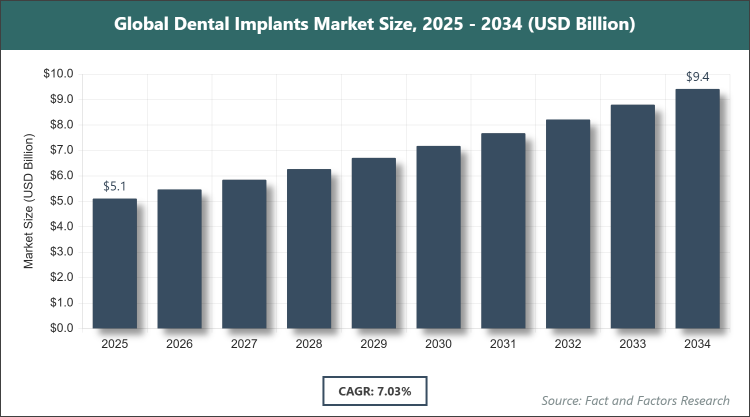
[235 + Pages Report] According to Facts & Factors, the global Dental Implants market size was estimated at USD 5.11 billion in 2025 and is expected to reach USD 9.39 billion by the end of 2034. The Dental Implants industry is anticipated to grow by a CAGR of 7.03% between 2026 and 2034. The Dental Implants Market is driven by the rising prevalence of dental disorders and increasing demand for cosmetic dentistry.
 Market Overview
The Dental Implants market refers to the sector encompassing artificial tooth roots made from biocompatible materials that are surgically placed into the jawbone to support dental prosthetics such as crowns, bridges, or dentures. This market includes various implant designs and materials aimed at restoring oral function, aesthetics, and structure for individuals suffering from tooth loss due to decay, injury, or periodontal disease. It plays a vital role in modern dentistry by providing long-term solutions that mimic natural teeth, promoting bone preservation, and enhancing overall quality of life through improved chewing ability and confidence in appearance.
Key Insights
- As per the analysis shared by our research analyst, the Dental Implants market is estimated to grow annually at a CAGR of around 7.03% over the forecast period (2026-2034).
- In terms of revenue, the Dental Implants market size was valued at around USD 5.11 billion in 2025 and is projected to reach USD 9.39 billion by 2034.
- The market is driven by the growing geriatric population and advancements in implant technologies.
- Based on the type segment, Endosteal Implants dominated with 42% share. Endosteal Implants dominate due to their direct placement in the jawbone, offering superior stability, higher success rates, and versatility for various clinical applications.
- Based on the material segment, Titanium dominated with 70% share. Titanium dominates owing to its excellent biocompatibility, strength, and proven track record in osseointegration, making it the preferred choice for long-lasting implants.
- Based on the end-user segment, Hospitals and Clinics dominated with 65% share. Hospitals and Clinics dominate as they handle a high volume of procedures with access to specialized equipment and multidisciplinary care teams.
- North America dominated with 37% share and is expected to continue leading due to advanced healthcare infrastructure, high dental awareness, and strong presence of key manufacturers.
Growth Drivers
- Rising Prevalence of Dental Disorders and Tooth Loss
The increasing occurrence of dental issues like caries, periodontitis, and edentulism, exacerbated by aging populations and lifestyle factors such as poor diet and smoking, is propelling demand for reliable tooth replacement options. Dental implants offer a durable alternative to traditional dentures, addressing functional and aesthetic needs effectively.
Moreover, heightened awareness of oral health through education and media is encouraging more individuals to seek advanced treatments, boosting market expansion. Innovations in implant designs further enhance accessibility and outcomes, supporting widespread adoption across diverse demographics.
- Technological Advancements in Implant Materials and Procedures
Developments in biocompatible materials, surface modifications, and digital tools like CAD/CAM and 3D printing are improving implant precision, reducing surgery time, and enhancing integration with bone. These advancements minimize complications and appeal to both practitioners and patients seeking efficient solutions.
Additionally, the integration of AI for treatment planning and guided surgery is streamlining processes, leading to better predictability and patient satisfaction. This technological progress is attracting investments and fostering competition, driving overall market growth.
- Increasing Demand for Cosmetic Dentistry
Growing emphasis on aesthetics, influenced by social media and cultural norms, is fueling interest in implants for smile enhancements. Implants provide natural-looking results, encouraging elective procedures among younger adults.
This trend is supported by rising disposable incomes in emerging markets, enabling access to premium dental services. As a result, the market is expanding through specialized cosmetic applications and innovative products tailored to aesthetic preferences.
Restraints
- High Costs of Procedures and Implants
The elevated expenses associated with dental implants, including surgery, materials, and follow-up care, limit accessibility, particularly in price-sensitive regions and among uninsured populations.
Furthermore, economic uncertainties can deter elective spending, slowing market penetration. This financial barrier often leads patients to opt for cheaper alternatives like bridges or dentures, impacting overall demand.
- Stringent Regulatory Requirements
Complex approval processes and varying international standards delay product launches and increase compliance costs for manufacturers.
These regulations can hinder innovation, especially for smaller companies, leading to market consolidation and reduced competition in certain segments.
Opportunities
- Expansion in Emerging Markets
Rapid urbanization and improving healthcare access in Asia-Pacific and Latin America present growth potential through increased dental tourism and local manufacturing.
Government initiatives for oral health and rising middle-class populations are creating demand for affordable, high-quality implants, opening avenues for market entry and partnerships.
- Adoption of Digital and Minimally Invasive Technologies
The shift towards tele-dentistry and AI-driven diagnostics offers opportunities for customized implants and remote consultations, expanding reach to underserved areas.
Collaborations between tech and dental firms are accelerating product development, enhancing efficiency and attracting tech-savvy consumers.
Challenges
- Shortage of Skilled Professionals
Limited availability of trained implantologists in developing regions restricts procedure volumes and quality, affecting market growth.
Ongoing education and certification programs are needed to address this gap, but implementation varies, posing ongoing hurdles.
- Risk of Complications and Failures
Potential issues like infection, implant rejection, or bone loss can undermine patient confidence and lead to legal challenges for providers.
Mitigating these requires advanced training and materials, but variability in outcomes remains a persistent concern influencing adoption rates.
Report Scope
Report Attribute |
Details |
Market Size 2025 |
USD 5.11 Billion |
Projected Market Size in 2034 |
USD 9.39 Billion |
CAGR Growth Rate |
7.03% CAGR |
Base Year |
2025 |
Forecast Years |
2026-2034 |
Key Market Players |
Institut Straumann AG, Envista, Dentsply Sirona, Zimmer Biomet, Henry Schein, Inc., Osstem Implant Co., Ltd., Nobel Biocare Services AG, BioHorizons IPH, Inc., Bicon Dental Implants, DentiumUSA, and Others. |
Key Segment |
By Type, By Material, By End-User, and By Region |
Major Regions Covered |
North America, Europe, Asia Pacific, Latin America, and the Middle East & Africa |
Purchase Options |
Request customized purchase options to meet your research needs. Explore purchase options |
Market Segmentation
The Dental Implants market is segmented by type, material, end-user, and region.
Based on Type Segment, the Dental Implants market is divided into endosteal implants, subperiosteal implants, transosteal implants, and others. The most dominant segment is Endosteal Implants, while the second most dominant is Subperiosteal Implants. Endosteal Implants lead due to their widespread use in standard procedures, providing strong osseointegration and versatility for single or multiple tooth replacements, which drives market growth by catering to the majority of patient needs and supporting high procedural success rates; Subperiosteal Implants follow as they offer alternatives for patients with insufficient bone density, enabling treatments without extensive grafting and contributing to market expansion through inclusivity in challenging cases.
Based on the Material Segment, the Dental Implants market is divided into titanium and zirconium. The most dominant segment is Titanium, while the second most dominant is Zirconium. Titanium dominates because of its proven durability, biocompatibility, and cost-effectiveness, facilitating broad adoption and market growth via reliable long-term performance; Zirconium ranks second, gaining traction for its aesthetic appeal in visible areas and hypoallergenic properties, helping drive the market by addressing patient preferences for metal-free options.
Based on End-User Segment, the Dental Implants market is divided into hospitals and clinics, dental laboratories, and others. The most dominant segment is Hospitals and Clinics, while the second most dominant is Dental Laboratories. Hospitals and Clinics hold dominance as primary sites for implant surgeries with integrated care and high patient traffic, propelling market growth through volume-driven demand; Dental Laboratories are second, essential for custom prosthetics fabrication, supporting market advancement by enabling precise, tailored solutions that enhance implant success.
Recent Developments
- In July 2025, ZimVie Inc. announced a strategic distribution partnership with Osstem Implant Co., Ltd., aiming to expand ZimVie's presence in the Chinese market and enhance access to innovative implant solutions.
- In June 2025, INSTITUT STRAUMANN AG planned to invest USD 76 to 102 million in its Villeret site in Switzerland to boost production of high-value products like the IEXCEL implant system.
- In March 2025, Dentsply Sirona participated in the Academy of Osseointegration’s Annual Meeting, showcasing advancements in implant technology.
- In February 2025, ZimVie launched a new dental implant system focused on enhanced stability and esthetics.
Regional Analysis
- North America to dominate the global market
North America leads the Dental Implants market with its sophisticated healthcare systems, high disposable incomes, and widespread adoption of cutting-edge dental technologies, where the United States dominates due to its extensive network of dental specialists, robust research ecosystem, and leading manufacturers driving innovation and market standards globally.
Europe holds a significant share through established dental practices and supportive policies, with Germany as the dominant country owing to its engineering expertise, strong export market, and focus on high-quality, precision-crafted implants that influence international trends.
Asia Pacific is rapidly expanding with growing healthcare investments and rising oral health consciousness, led by China as the dominant country through its vast population, increasing local production, and government efforts to improve dental access and affordability.
Latin America is emerging with medical tourism and improving infrastructure, where Brazil dominates via its thriving cosmetic dentistry sector, skilled professionals, and cost-effective treatments attracting international patients.
The Middle East & Africa is progressing with urbanization and health initiatives, dominated by South Africa through its advanced facilities, regional leadership in dental education, and role as a gateway for market entry in Africa.
Competitive Analysis
The global Dental Implants market is dominated by players:
- Institut Straumann AG
- Envista
- Dentsply Sirona
- Zimmer Biomet
- Henry Schein, Inc.
- Osstem Implant Co., Ltd.
- Nobel Biocare Services AG
- BioHorizons IPH, Inc.
- Bicon Dental Implants
- DentiumUSA
The global Dental Implants market is segmented as follows:
By Type
- Endosteal Implants
- Subperiosteal Implants
- Transosteal Implants
- Others
By Material
- Titanium
- Zirconium
- Others
By End-User
- Hospitals and Clinics
- Dental Laboratories
- Others
By Region
- North America
- The U.S.
- Canada
- Mexico
- Europe
- France
- The UK
- Spain
- Germany
- Italy
- Rest of Europe
- Asia Pacific
- China
- Japan
- India
- Australia
- Southeast Asia
- Rest of Asia Pacific
- The Middle East & Africa
- Saudi Arabia
- UAE
- Egypt
- Kuwait
- South Africa
- Rest of the Middle East & Africa
- Latin America
- Brazil
- Argentina
- Rest of Latin America
Industry Major Market Players
- Institut Straumann AG
- Envista
- Dentsply Sirona
- Zimmer Biomet
- Henry Schein, Inc.
- Osstem Implant Co., Ltd.
- Nobel Biocare Services AG
- BioHorizons IPH, Inc.
- Bicon Dental Implants
- DentiumUSA



Copyright © 2025 - 2026, All Rights Reserved, Facts and Factors