
Search Market Research Report
Contact Lens Market Size, Share Global Analysis Report, 2026-2034

Contact Lens Market Size, Share, Growth Analysis Report By Type (Soft Contact Lenses, Rigid Gas Permeable Contact Lenses and Others), By Design (Spherical Lenses, Toric Lenses, Multifocal Lenses and Others), By Application (Vision Correction, Cosmetic Lenses, Therapeutic Lenses and Others), and By Region - Global Industry Insights, Overview, Comprehensive Analysis, Trends, Statistical Research, Market Intelligence, Historical Data and Forecast 2026-2034
Industry Insights
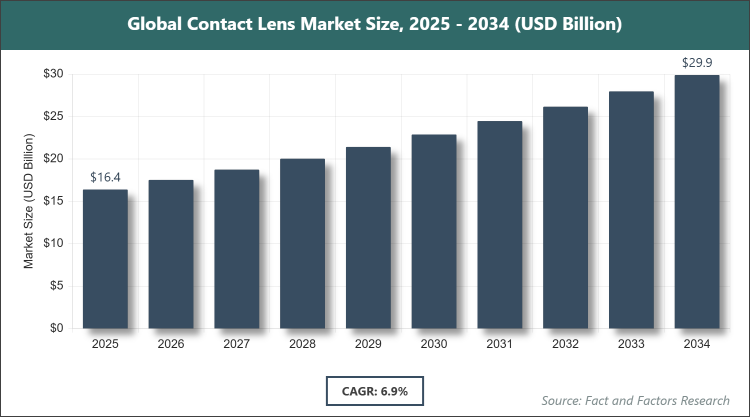
(228+ Pages Report) According to Facts & Factors, the global Contact Lens market size was estimated at USD 16.4 billion in 2025 and is expected to reach USD 29.8 billion by the end of 2034. The Contact Lens industry is anticipated to grow by a CAGR of 6.9% between 2026 and 2034. The Contact Lens Market is driven by the surging global incidence of refractive errors, growing preference for aesthetic and convenient vision solutions, and continuous advancements in lens materials that enhance comfort and eye health.
 Market Overview
The contact lens market comprises the development, production, and distribution of corrective and non-corrective lenses designed to be worn directly on the cornea of the eye. These devices provide an effective alternative to traditional eyeglasses by offering unobstructed peripheral vision, greater freedom for physical activities, and enhanced cosmetic appeal. Contact lenses are crafted from advanced polymers such as silicone hydrogel and hydrogel, which allow for high oxygen transmission to maintain corneal health during extended wear. The market serves diverse needs, including vision correction for conditions like myopia, hyperopia, astigmatism, and presbyopia, as well as therapeutic applications for eye injuries or diseases and cosmetic uses to alter eye color or appearance. Innovations focus on daily disposables, extended-wear options, and specialized designs that address lifestyle demands, making contact lenses a preferred choice for millions seeking both functional and stylistic eye care solutions worldwide.
Key Insights
- As per the analysis shared by our research analyst, the global Contact Lens market is expected to grow at a CAGR of 6.9% during the forecast period.
- In terms of revenue, the market is expected to reach USD 29.8 billion by 2034 from USD 16.4 billion in 2025.
- The market is driven by the rising prevalence of refractive errors, increasing consumer demand for comfortable and aesthetically pleasing vision correction options, and technological advancements in lens materials and designs.
- Based on the type segment, the soft contact lenses subsegment dominated the market with a share of 78% owing to its superior comfort, flexibility, high water content, and excellent oxygen permeability that reduces dryness and irritation.
- Based on the design segment, the spherical lenses subsegment dominated the market with a share of 55% because they provide straightforward correction for common spherical refractive errors like myopia and hyperopia, making them accessible and cost-effective for the majority of users.
- Based on the application segment, the vision correction subsegment dominated the market with a share of 76% as it directly addresses the vast majority of visual impairments worldwide, offering precise, customizable solutions that outperform glasses in daily functionality and convenience.
- Based on the region segment, the North America region dominated the market with a share of 36% owing to high consumer awareness about eye health, robust healthcare infrastructure, elevated disposable incomes, and strong presence of leading manufacturers driving premium product adoption.
Growth Drivers
- Rising Prevalence of Refractive Errors
The global increase in myopia, hyperopia, astigmatism, and presbyopia cases fuels substantial demand for contact lenses as a primary vision correction method. Lifestyle factors such as prolonged screen time, reduced outdoor activities, and urbanization accelerate these conditions, particularly among younger populations in Asia and urban centers worldwide.
This demographic shift creates a sustained need for reliable, comfortable lenses that support daily activities without the limitations of eyeglasses. Manufacturers respond by developing specialized designs that address specific impairments, further embedding contact lenses into routine eye care practices and expanding market penetration across age groups.
- Technological Advancements in Materials and Designs
Innovations in silicone hydrogel and hybrid materials enhance breathability, moisture retention, and UV protection, significantly improving user comfort and reducing complications like dry eyes or infections. Daily disposable and extended-wear options, combined with smart features such as blue light filtering, attract tech-savvy consumers seeking multifunctional solutions.
These advancements lower barriers to adoption by making lenses more accessible and user-friendly, while also enabling therapeutic applications for conditions like keratoconus or post-surgical recovery. As research continues to integrate sensors and drug delivery, contact lenses evolve from simple optics to advanced health-monitoring devices, driving premium pricing and recurring revenue streams.
- Increasing Preference for Cosmetic and Lifestyle-Oriented Lenses
Growing aesthetic consciousness, influenced by social media and fashion trends, boosts demand for colored and cosmetic contact lenses among younger demographics. These products allow users to alter eye appearance without compromising vision, appealing to both corrective and non-corrective wearers in emerging markets.
This trend diversifies the market beyond medical necessity, fostering impulse purchases and seasonal demand. Companies capitalize by offering safe, FDA-approved options with natural tints and patterns, which not only expand the addressable consumer base but also encourage trial and loyalty through stylish, comfortable designs.
Restraints
- Risk of Eye Infections and Associated Complications
Improper use, poor hygiene, or extended wear of certain lenses can lead to microbial keratitis, corneal ulcers, and other serious eye conditions, deterring potential users and prompting regulatory scrutiny.
Healthcare professionals emphasize the importance of proper fitting and maintenance, yet non-compliance remains common, especially among first-time or occasional wearers. This perception of risk slows market growth in regions with limited access to eye care education.
- High Cost and Ongoing Maintenance Requirements
Premium lenses, particularly daily disposables and specialty designs, involve recurring expenses that can burden budget-conscious consumers in developing economies.
The need for solutions, cases, and regular replacements adds to the total cost of ownership, making eyeglasses a more economical alternative for some segments. Economic fluctuations further amplify this restraint, limiting penetration in price-sensitive markets.
Opportunities
- Expansion in Emerging Markets
Rising disposable incomes, improving healthcare infrastructure, and increasing awareness of vision health in countries like India, China, and Brazil present untapped growth potential.
Government initiatives for eye care and e-commerce platforms lower entry barriers, enabling rapid adoption among urban middle-class populations. Localized manufacturing and affordable product lines can accelerate market entry in these high-population regions.
- Development of Smart and Therapeutic Contact Lenses
Integration of biosensors for glucose monitoring, drug release, and augmented reality features opens new therapeutic and consumer electronics applications.
Partnerships between lens manufacturers and tech firms accelerate innovation, creating high-margin products that appeal to diabetic patients, athletes, and professionals. This convergence positions contact lenses as versatile wearable devices beyond traditional vision correction.
Challenges
- Stringent Regulatory Approvals and Compliance
Complex approval processes from bodies like the FDA and EMA delay product launches and increase development costs for novel lens technologies.
Variations in regional standards require customized formulations, complicating global supply chains and raising barriers for smaller players.
- Competition from Alternative Vision Correction Methods
Surgical options such as LASIK and emerging orthokeratology treatments offer permanent solutions, diverting demand from daily lens wearers.
Advancements in refractive surgery reduce the long-term reliance on contacts, particularly among younger patients seeking freedom from devices. This shift pressures manufacturers to innovate continuously to maintain relevance.
Report Scope
Report Attribute |
Details |
Market Size 2025 |
USD 16.4 Billion |
Projected Market Size in 2034 |
USD 29.8 Billion |
CAGR Growth Rate |
6.9% CAGR |
Base Year |
2025 |
Forecast Years |
2026-2034 |
Key Market Players |
Johnson & Johnson Vision Care, Alcon Inc., CooperVision, Bausch + Lomb, EssilorLuxottica, and Others. |
Key Segment |
By Type, By Design, By Application, and By Region |
Major Regions Covered |
North America, Europe, Asia Pacific, Latin America, and the Middle East & Africa |
Purchase Options |
Request customized purchase options to meet your research needs. Explore purchase options |
Market Segmentation
The Contact Lens market is segmented by type, application, distribution channel, and region.
Based on Type Segment, the Contact Lens market is divided into soft contact lenses, rigid gas permeable contact lenses, hybrid contact lenses, and others. The soft contact lenses segment is the most dominant, capturing the largest share due to exceptional comfort, ease of adaptation, and widespread availability in daily and extended-wear formats that appeal to a broad consumer base seeking hassle-free vision correction. This dominance drives overall market growth by encouraging higher compliance and repeat usage among both new and experienced wearers. The rigid gas permeable segment holds the second position, valued for superior optical clarity and durability in correcting complex astigmatism and keratoconus cases, appealing to specialized users who prioritize long-term eye health and crisp vision over initial comfort.
Based on Design Segment, the Contact Lens market is divided into spherical lenses, toric lenses, multifocal lenses, and others. The spherical lenses segment leads the market as the most dominant, primarily because it effectively addresses the most common refractive errors with simple, affordable designs that suit the majority of prescriptions and promote mass-market accessibility. This leadership propels market expansion by serving as an entry point for new users while maintaining steady demand through routine replacements. Toric lenses rank as the second most dominant, gaining traction due to their specialized ability to correct astigmatism with stable orientation features, helping to expand the addressable market among the growing population with irregular corneal shapes and driving innovation in customized fitting technologies.
Based on Application Segment, the Contact Lens market is divided into vision correction, cosmetic lenses, therapeutic lenses, prosthetic lenses, and others. The vision correction segment is overwhelmingly dominant, as it fulfills the core medical need for precise refractive error management across all age groups, forming the backbone of market revenue through consistent therapeutic demand. This segment accelerates growth by integrating seamlessly with routine eye care practices and fostering loyalty via proven efficacy. The cosmetic lenses segment is the second most dominant, fueled by rising interest in eye color enhancement and aesthetic personalization, particularly among younger demographics, which broadens the market beyond medical applications and stimulates premium pricing strategies.
Recent Developments
- Alcon Launched Precision1 Daily Disposable Lenses with SmartSurface Technology in Early 2025: This new offering features a permanent water gradient for all-day hydration, significantly reducing dryness for digital device users and capturing share in the premium daily wear category through targeted marketing in North America and Europe.
- CooperVision Introduced Biofinity Energys Multifocal Lenses in Mid-2025: Designed specifically to alleviate digital eye strain, the lenses incorporate advanced aspheric optics that support seamless focus transitions, boosting adoption among professionals and students while reinforcing the company's leadership in specialty vision solutions.
- Johnson & Johnson Vision Expanded Acuvue Oasys with Transitions Light Intelligent Technology in Late 2025: The photochromic lenses adapt to changing light conditions, providing built-in UV protection and glare reduction, which has driven strong sales in outdoor and sports segments globally.
- Bausch + Lomb Rolled Out Infuse Silicone Hydrogel Daily Lenses with ProBalance Technology in 2026: Focused on maintaining ocular surface health, the lenses include electrolytes and osmoprotectants, addressing dry eye concerns and appealing to sensitive users in emerging Asian markets.
Regional Analysis
- North America to dominate the global market
North America maintains its leading position in the global contact lens market through advanced healthcare systems, widespread insurance coverage for vision products, and a culturally ingrained preference for contact lenses among active populations. The United States serves as the primary driver, benefiting from high consumer awareness, dense networks of optometrists, and rapid adoption of innovative technologies like daily disposables and multifocal designs. Strong marketing campaigns by key players, combined with rising cases of digital eye strain, sustain robust demand across all age groups. Canada contributes steadily with similar trends in urban centers, where lifestyle factors favor non-intrusive vision correction. Overall, the region's emphasis on preventive eye care and premium product availability ensures continued market leadership.
Europe represents a mature yet steadily expanding market, characterized by stringent quality standards and a focus on sustainable, biocompatible materials. Germany and the United Kingdom dominate regional consumption due to sophisticated healthcare infrastructure and high penetration of specialty lenses for presbyopia and astigmatism. Aging demographics in Western Europe fuel demand for multifocal and therapeutic options, while Eastern European countries show accelerating growth through improving economic conditions and e-commerce expansion. Regulatory harmonization across the EU facilitates seamless product distribution, supporting innovation in comfort-enhancing features.
Asia Pacific emerges as the fastest-growing region, propelled by massive populations and surging myopia rates among youth in China, India, and South Korea. China leads with its vast urban consumer base and government-backed eye health initiatives, driving adoption of affordable daily disposables and cosmetic variants. India follows closely, where rising middle-class incomes and digital lifestyles increase demand for convenient vision solutions in tier-1 and tier-2 cities. Japan contributes through technological leadership in high-oxygen permeable lenses, while Southeast Asian nations benefit from expanding retail and online channels. The region's youthful demographics and increasing beauty consciousness create diverse opportunities across corrective and aesthetic applications.
Latin America exhibits promising growth potential amid improving healthcare access and urbanization trends. Brazil stands out as the dominant player, supported by a large young population and expanding middle class that favors stylish contact lenses for both vision and cosmetic purposes. Mexico and Argentina show steady increases through rising awareness campaigns and partnerships with global brands. Challenges such as economic volatility are offset by e-commerce growth, which makes premium products more accessible in remote areas.
The Middle East & Africa region demonstrates gradual but consistent expansion, driven by investments in modern eye care facilities and growing expatriate communities. The United Arab Emirates and Saudi Arabia lead adoption of advanced lenses, particularly among urban professionals seeking comfort during long work hours. South Africa contributes through established distribution networks serving both corrective and therapeutic needs. Rising awareness of eye health in urban hubs across the continent supports future demand, though affordability remains a key factor in broader penetration.
Competitive Analysis
The global Contact Lens market is dominated by players:
- Johnson & Johnson Vision Care
- Alcon Inc.
- The Cooper Companies, Inc. (CooperVision)
- Bausch + Lomb Incorporated
- EssilorLuxottica
- Hoya Corporation
- Menicon Co., Ltd.
- Carl Zeiss Meditec AG
- Contamac Ltd.
- SynergEyes, Inc.
The global Contact Lens market is segmented as follows:
By Type
- Soft Contact Lenses
- Rigid Gas Permeable Contact Lenses
- Hybrid Contact Lenses
- Others
By Design
- Spherical Lenses
- Toric Lenses
- Multifocal Lenses
- Others
By Application
- Vision Correction
- Cosmetic Lenses
- Therapeutic Lenses
- Prosthetic Lenses
- Others
By Distribution Channel
- Retail Optical Stores
- Online Platforms
- Hospitals and Clinics
- Others
By Region
- North America
- The U.S.
- Canada
- Mexico
- Europe
- France
- The UK
- Spain
- Germany
- Italy
- Rest of Europe
- Asia Pacific
- China
- Japan
- India
- Australia
- Southeast Asia
- Rest of Asia Pacific
- The Middle East & Africa
- Saudi Arabia
- UAE
- Egypt
- Kuwait
- South Africa
- Rest of the Middle East & Africa
- Latin America
- Brazil
- Argentina
- Rest of Latin America
Industry Major Market Players
The global Contact Lens market is dominated by players:
- Johnson & Johnson Vision Care
- Alcon Inc.
- The Cooper Companies, Inc. (CooperVision)
- Bausch + Lomb Incorporated
- EssilorLuxottica
- Hoya Corporation
- Menicon Co., Ltd.
- Carl Zeiss Meditec AG
- Contamac Ltd.
- SynergEyes, Inc.



Copyright © 2025 - 2026, All Rights Reserved, Facts and Factors