
Search Market Research Report
Quinine Market Size, Share Global Analysis Report, 2026-2034

Quinine Market Size, Share, Growth Analysis Report By Type (200mg, 300mg, and Others), By Application (Problematic Leg Cramps, Malaria, and Others), By Administration (Intramuscular, Oral, Intravenous, and Others), By End User (Hospitals, Clinics, and Others), and By Region - Global Industry Insights, Overview, Comprehensive Analysis, Trends, Statistical Research, Market Intelligence, Historical Data and Forecast 2026-2034
Industry Insights
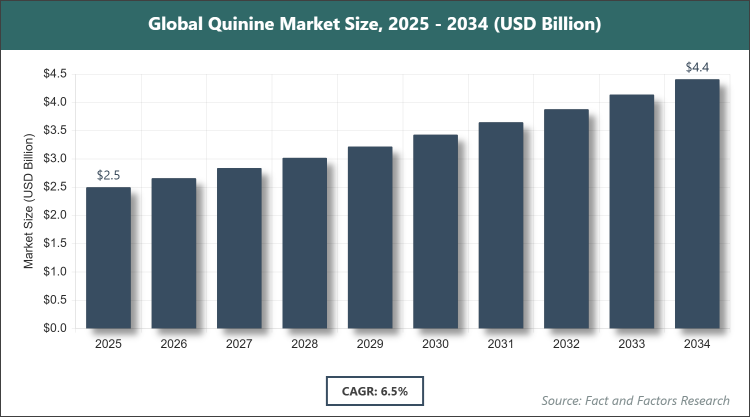
[235 Pages Report] According to Facts & Factors, the global quinine market size was estimated at USD 2.5 billion in 2025 and is expected to reach USD 4.5 billion by the end of 2034. The Quinine industry is anticipated to grow by a CAGR of 6.5% between 2026 and 2034. The Quinine Market is driven by increasing demand for tonic water and rising incidences of malaria.
 Market Overview
The quinine market encompasses the production, distribution, and consumption of quinine, a naturally occurring alkaloid derived primarily from the bark of the cinchona tree, which has been historically utilized for its medicinal properties, particularly in treating malaria and other conditions, while also finding applications in the beverage industry as a key ingredient in tonic water for its bitter flavor profile. This market involves various stakeholders, including pharmaceutical companies, beverage manufacturers, and healthcare providers, focusing on both therapeutic and non-therapeutic uses to address health needs and consumer preferences in diverse global regions.
Key Insights
- As per the analysis shared by our research analyst, the Quinine market is expected to grow at a CAGR of 6.5% during the forecast period of 2026-2034.
- In terms of revenue, the Quinine market size was valued at about USD 2.5 billion in 2025 and is expected to reach USD 4.5 billion by 2034.
- The Quinine market is driven by increasing demand for tonic water and rising incidences of malaria.
- Based on the type, the 200mg segment dominated the market with a share of 45% in 2025 due to its widespread use in standard dosing for leg cramps and malaria treatment, offering optimal efficacy and patient compliance.
- Based on the application, the problematic leg cramps segment dominated the market with a share of 50% in 2025 because of high consumer demand for relief from nocturnal leg cramps, supported by quinine's muscle relaxant properties.
- Based on the administration, the intramuscular segment dominated the market with a share of 40% in 2025 owing to its rapid absorption and effectiveness in acute malaria cases requiring immediate intervention.
- Based on the end user, the hospitals segment dominated the market with a share of 55% in 2025 as hospitals are primary centers for malaria treatment and require bulk quinine supplies for inpatient care.
- North America dominated the market with a share of 35% in 2025 due to high prevalence of imported malaria cases and strong demand for tonic water in the beverage sector.
Market Dynamics
Growth Drivers
- Increasing Demand for Tonic Water
The surge in popularity of tonic water, which contains quinine as a key ingredient, is significantly propelling the market forward, as consumers increasingly seek out premium mixers for cocktails and non-alcoholic beverages, driven by a global rise in cocktail culture and health-conscious choices where quinine's therapeutic qualities like stress relief and digestive aid are valued. This trend is further amplified by the expansion of the alcoholic beverage industry, particularly gin and tonic combinations, leading to higher production volumes and innovation in flavored tonic waters.
Moreover, the shift towards online sales channels during and post-pandemic has made tonic water more accessible, boosting consumption among younger demographics who prefer convenient purchasing options, thereby sustaining long-term growth in quinine demand across both developed and emerging markets.
- Rising Malaria Cases
The escalating number of malaria incidences worldwide, particularly in tropical regions, is a major driver, as quinine remains a vital component in antimalarial treatments despite the availability of alternatives, ensuring steady pharmaceutical demand. This is compounded by climate change factors that expand mosquito habitats, leading to more outbreaks and necessitating reliable quinine supplies for healthcare systems.
Additionally, international health initiatives and funding from organizations like WHO emphasize quinine's role in combination therapies, fostering research and development to enhance its efficacy and reduce resistance, which in turn supports market expansion through improved formulations and global distribution networks.
- Growing Alcoholic Beverage Consumption
The boom in the spirits industry, especially premium gins and craft cocktails, directly fuels quinine usage in tonic water, as bars, restaurants, and home mixologists prioritize high-quality ingredients for enhanced taste experiences. This driver is supported by rising disposable incomes in urban areas, encouraging experimentation with luxury beverages.
Furthermore, marketing campaigns by beverage companies highlight quinine's natural origins and health benefits, attracting health-aware consumers and expanding market reach into new demographics, while partnerships with spirit brands create synergies that drive overall quinine consumption upward.
Restraints
- Low Consumer Awareness
Limited knowledge among consumers about quinine's applications beyond being a mixer in drinks hinders broader adoption, particularly in non-endemic regions where its medicinal benefits for conditions like leg cramps are underrecognized. This lack of awareness results in subdued demand in potential growth areas.
Compounding this issue are educational gaps in healthcare and beverage sectors, where insufficient promotion leads to reliance on alternatives, impacting quinine's market penetration and requiring targeted awareness campaigns to unlock latent opportunities.
- Potential Health Issues
Concerns over side effects such as headaches, vision impairments, and other adverse reactions associated with quinine use restrict its prescription and consumption, especially in unregulated markets where dosage control is challenging. This restraint is amplified by medical advisories cautioning against long-term use.
Regulatory scrutiny and reports of quinine-related health complications further deter both pharmaceutical and beverage applications, necessitating rigorous safety studies and reformulations to mitigate risks and restore consumer confidence.
Opportunities
- Product Innovations
Advancements in quinine formulations, including new flavors and natural ingredient integrations in tonic water, present significant opportunities to capture evolving consumer preferences for healthier, premium products. This innovation extends to pharmaceutical enhancements for better bioavailability.
Such developments can tap into untapped markets by offering differentiated products that align with trends like organic and low-sugar options, potentially increasing market share through R&D investments and collaborations between pharma and beverage industries.
- Rising Consumer Spending Power
Increasing disposable incomes from urbanization and industrialization enable greater expenditure on premium beverages and healthcare, opening avenues for quinine-infused products in emerging economies. This opportunity is ripe for expansion in Asia and Latin America.
Leveraging this trend involves strategic marketing to highlight quinine's dual benefits, fostering brand loyalty and driving volume growth in both therapeutic and recreational segments of the market.
Challenges
- Regulatory Restrictions
Non-approval by bodies like the FDA for certain quinine uses, such as supplements, limits market scope, confining applications to specific dosages in tonic water and malaria treatment. This challenge requires navigation of complex compliance landscapes.
Ongoing regulatory changes, including labeling requirements in regions like the EU and Canada, add operational hurdles, demanding adaptive strategies to maintain market presence without infringing on evolving standards.
- Low Awareness Hindering Growth
Persistent gaps in public understanding of quinine's benefits and safe usage pose ongoing challenges, particularly in diversifying applications beyond traditional ones. This affects adoption rates in new demographics and regions.
Addressing this involves comprehensive educational initiatives and partnerships with health organizations to build trust and expand knowledge, though it requires sustained effort to overcome entrenched perceptions.
Report Scope
Report Attribute |
Details |
Market Size 2025 |
USD 2.5 Billion |
Projected Market Size in 2034 |
USD 4.5 Billion |
CAGR Growth Rate |
6.5% CAGR |
Base Year |
2025 |
Forecast Years |
2026-2034 |
Key Market Players |
Aecochem Corp, Haihang Industry Co. Ltd., Actavis, Shreeji Pharma International, Wockhardt, Vital Labs, Trademax Pharmaceuticals & Chemicals, Van Wankum Ingredients, Hangzhou Dayang Co. Ltd., IS Chemical Technology Ltd., Leocorno Enterprises, Bickford & Sons, Fever-Tree, Schweppes, Chempro Pharma Private Limited, and Others. |
Key Segment |
By Type, By Application, By Administration, By End User, and By Region |
Major Regions Covered |
North America, Europe, Asia Pacific, Latin America, and the Middle East & Africa |
Purchase Options |
Request customized purchase options to meet your research needs. Explore purchase options |
Market Segmentation
The Quinine market is segmented by type, application, administration, end-user, and region.
Based on Type Segment, the quinine market is divided into 200mg, 300mg, and others. The most dominant segment is 200mg, holding the largest share due to its standard dosing regimen that balances efficacy and safety for common treatments like leg cramps and mild malaria, making it the preferred choice among healthcare providers and contributing to market growth by ensuring consistent demand in pharmaceutical applications; the second most dominant is 300mg, which gains traction in severe cases requiring higher potency, driving the market through specialized use in hospital settings where rapid symptom relief is critical, thus supporting overall expansion by addressing diverse patient needs.
Based on Application Segment, the quinine market is divided into problematic leg cramps, malaria, and others. The most dominant segment is problematic leg cramps, leading the market because of widespread prevalence among aging populations and athletes, where quinine's muscle-relaxing effects provide effective relief, propelling market growth via over-the-counter and prescription channels; the second most dominant is malaria, which sustains demand in endemic areas through its role in treatment protocols, aiding market drive by integrating with global health efforts to combat the disease and ensuring steady pharmaceutical production.
Based on Administration Segment, the quinine market is divided into intramuscular, oral, intravenous, and others. The most dominant segment is intramuscular, commanding the top position owing to its quick onset in emergency malaria treatments, enhancing patient outcomes and boosting market growth in clinical environments; the second most dominant is oral, popular for its convenience in outpatient care and leg cramp management, contributing to market expansion by facilitating easier access and compliance among users.
Based on End User Segment, the Quinine market is divided into hospitals, clinics, and others. The most dominant segment is hospitals, dominating due to their role as primary facilities for acute care involving quinine for malaria and other conditions, driving the market through bulk procurement and specialized administration; the second most dominant is clinics, which support growth by handling outpatient treatments and preventive care, helping to broaden quinine's reach in community health settings.
Recent Developments
- In February 2022, Leocorno Enterprises launched Peer luxury tonic water with innovative new flavors, aiming to cater to premium beverage consumers and expand quinine's application in the high-end mixer segment.
- In June 2022, Bickford & Sons introduced a new tonic water variant incorporating natural ingredients, enhancing the product's appeal by aligning with health trends and boosting quinine demand in the beverage industry.
- In June 2022, Fever-Tree released Spanish Clementine tonic water, innovating on traditional quinine-based recipes to attract flavor-seeking customers and drive market growth through product diversification.
- In March 2022, Schweppes launched Grapefruit Slimline tonic along with other new variants, focusing on low-calorie options to meet consumer preferences for healthier quinine-infused drinks.
Regional Analysis
- North America to dominate the global market
North America leads the quinine market primarily due to the United States serving as the dominating country, where a combination of imported malaria cases from travel and a robust beverage industry fuels demand for quinine in both pharmaceutical treatments and popular cocktails like gin and tonic, supported by advanced healthcare infrastructure that ensures efficient distribution and usage in hospitals and clinics, while consumer trends towards premium mixers further solidify its position through strong retail and online channels that cater to health-conscious populations seeking natural remedies for conditions such as leg cramps.
Europe follows with significant contributions from countries like the United Kingdom, which dominates the region through its established cocktail culture and historical affinity for tonic water, integrated into social drinking habits, alongside pharmaceutical applications for managing malaria in travelers and leg cramps in aging demographics, bolstered by stringent regulatory frameworks that promote safe quinine use and innovation in flavored beverages, creating a stable market environment that emphasizes quality and sustainability in production.
Asia Pacific is rapidly expanding, with India as the dominating country due to high malaria endemicity in rural areas requiring extensive quinine supplies for treatment, coupled with growing urbanization that increases tonic water consumption in urban bars and households, driven by rising disposable incomes and health awareness campaigns that highlight quinine's benefits, while local manufacturing capabilities enhance affordability and accessibility across diverse populations.
Latin America shows promising growth led by Brazil, the dominating country where tropical climates contribute to persistent malaria challenges addressed through quinine-based therapies, alongside a vibrant beverage sector incorporating quinine in traditional and modern drinks, supported by government health initiatives and increasing tourism that boosts demand for quinine-infused products in hospitality settings.
The Middle East & Africa region is marked by Africa as the dominating area, particularly countries like Nigeria, where widespread malaria prevalence necessitates large-scale quinine procurement for public health programs, combined with emerging beverage markets introducing tonic water to urban consumers, aided by international aid and investments that improve supply chains and promote quinine's dual role in medicine and refreshments.
Competitive Analysis
The global Quinine market is dominated by players:
- Aecochem Corp
- Haihang Industry Co. Ltd.
- Actavis
- Shreeji Pharma International
- Wockhardt
- Vital Labs
- Trademax Pharmaceuticals & Chemicals
- Van Wankum Ingredients
- Hangzhou Dayang Co. Ltd.
- IS Chemical Technology Ltd.
- Leocorno Enterprises
- Bickford & Sons
- Fever-Tree
- Schweppes
- Chempro Pharma Private Limited
The global Quinine market is segmented as follows:
By Type
- 200mg
- 300mg
- Others
By Application
- Problematic Leg Cramps
- Malaria
- Others
By Administration
- Intramuscular
- Oral
- Intravenous
- Others
By End User
- Hospitals
- Clinics
- Others
By Region
- North America
- The U.S.
- Canada
- Mexico
- Europe
- France
- The UK
- Spain
- Germany
- Italy
- Rest of Europe
- Asia Pacific
- China
- Japan
- India
- Australia
- Southeast Asia
- Rest of Asia Pacific
- The Middle East & Africa
- Saudi Arabia
- UAE
- Egypt
- Kuwait
- South Africa
- Rest of the Middle East & Africa
- Latin America
- Brazil
- Argentina
- Rest of Latin America
Industry Major Market Players
The global Quinine market is dominated by players:
Aecochem Corp
Haihang Industry Co. Ltd.
Actavis
Shreeji Pharma International
Wockhardt
Vital Labs
Trademax Pharmaceuticals & Chemicals
Van Wankum Ingredients
Hangzhou Dayang Co. Ltd.
IS Chemical Technology Ltd.
Leocorno Enterprises
Bickford & Sons
Fever-Tree
Schweppes
Chempro Pharma Private Limited
Frequently Asked Questions



Copyright © 2025 - 2026, All Rights Reserved, Facts and Factors