
Search Market Research Report
Pacifier Market Size, Share Global Analysis Report, 2026-2034

Pacifier Market Size, Share, Growth Analysis Report By Type (Single-Piece Pacifier and Multi-Piece Pacifier), By Material (Silicone Pacifier, Natural Rubber/Latex Pacifier, and Others), By Distribution Channel (Supermarkets & Hypermarkets, Online Stores, Specialty Stores, and Others), and By Region - Global Industry Insights, Overview, Comprehensive Analysis, Trends, Statistical Research, Market Intelligence, Historical Data and Forecast 2026-2034
Industry Insights
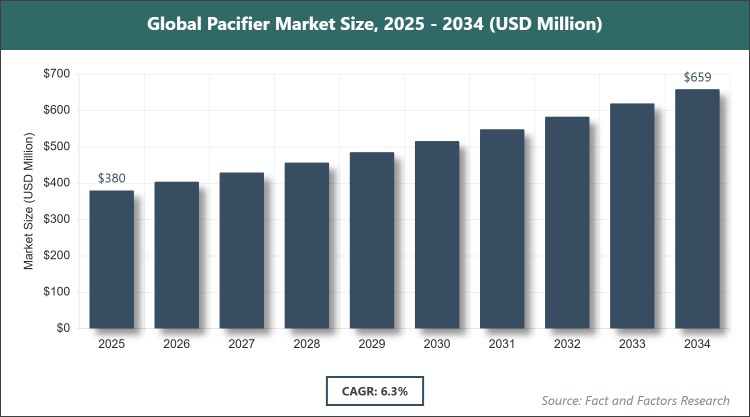
[219 Pages Report] According to Facts & Factors, the global Pacifier market size was estimated at USD 380 million in 2025 and is expected to reach USD 660 million by the end of 2034. The Pacifier industry is anticipated to grow by a CAGR of 6.3% between 2026 and 2034. The Pacifier Market is driven by rising global birth rates, increasing parental awareness of infant soothing needs, and strong demand for safe, BPA-free, and ergonomic designs.
 Market Overview
The Pacifier market encompasses the design, manufacturing, and distribution of nipple-shaped devices made from safe materials such as silicone or natural rubber/latex, intended to satisfy an infant’s natural sucking reflex, provide comfort, and help soothe fussiness between feedings. These products are available in single-piece and multi-piece constructions with various shapes, including orthodontic, cherry, and butterfly designs that support proper oral development while minimizing risks of dental misalignment. The market includes products tailored for different age groups from newborns to toddlers, featuring advanced features such as ventilation holes, glow-in-the-dark handles, and clip attachments, all manufactured under strict safety standards to ensure they are free from harmful chemicals like BPA, phthalates, and nitrosamines.
Key Insights
- As per the analysis shared by our research analyst, the Pacifier market is estimated to grow annually at a CAGR of around 6.3% over the forecast period (2026-2034).
- In terms of revenue, the Pacifier market size was valued at around USD 380 million in 2025 and is projected to reach USD 660 million by 2034.
- The Pacifier Market is driven by rising global birth rates and demand for safe infant soothing products.
- Based on the Type, the Single-Piece Pacifier segment dominated the market in 2025 with a share of 68% due to superior hygiene, ease of cleaning, and reduced risk of bacterial accumulation.
- Based on the Material, the Silicone Pacifier segment dominated the market in 2025 with a share of 71% owing to its durability, hypoallergenic properties, resistance to discoloration, and widespread preference for BPA-free materials.
- Based on the Distribution Channel, the Supermarkets & Hypermarkets segment dominated the market in 2025 with a share of 47% because of wide product visibility, immediate availability, and strong consumer trust in established retail chains.
- Europe dominated the global Pacifier market in 2025 with a share of 34%, attributed to high parental awareness, stringent safety regulations, advanced healthcare standards, and the strong presence of premium brands.
Growth Drivers
- Increasing Global Birth Rates and Working Parents
A steady rise in worldwide births, combined with growing numbers of dual-income households, has heightened demand for reliable soothing solutions that help infants self-soothe and allow parents greater flexibility during daily routines.
Heightened focus on infant oral health and developmental milestones has encouraged parents to choose orthodontic and ergonomically designed pacifiers, boosting premium product adoption across both developed and emerging markets.
Restraints
- Safety Concerns and Regulatory Stringency
Frequent media reports on potential choking hazards or chemical leaching have made parents highly cautious, slowing the adoption of lesser-known brands and increasing compliance costs for manufacturers.
Strict regional regulations on material composition, testing protocols, and labeling requirements raise entry barriers for new players and extend product development timelines.
Opportunities
- Eco-Friendly and Smart Pacifier Innovations
Rising demand for sustainable materials such as plant-based silicone alternatives and recyclable packaging opens new premium segments appealing to environmentally conscious millennial and Gen-Z parents.
Integration of sensors for temperature, sleep, and health monitoring in smart pacifiers creates high-value opportunities in the connected baby-care ecosystem.
Challenges
- Intense Competition and Counterfeit Products
A highly fragmented market with numerous local and private-label offerings leads to price pressure and brand dilution, making it difficult for premium manufacturers to maintain margins.
Prevalence of counterfeit and substandard products in online channels erodes consumer trust and poses safety risks, complicating quality control for established brands.
Report Scope
Report Attribute |
Details |
Market Size 2025 |
USD 380 Million |
Projected Market Size in 2034 |
USD 660 Million |
CAGR Growth Rate |
6.3% CAGR |
Base Year |
2025 |
Forecast Years |
2026-2034 |
Key Market Players |
Koninklijke Philips N.V. (Philips Avent), MAM Babyartikel GmbH, NUK, Tommee Tippee, Chicco, and Others. |
Key Segment |
By Type, By Material, By Distribution Channel, and By Region |
Major Regions Covered |
North America, Europe, Asia Pacific, Latin America, and the Middle East & Africa |
Purchase Options |
Request customized purchase options to meet your research needs. Explore purchase options |
Market Segmentation
The Pacifier market is segmented by type, material, distribution channel, and region.
Based on Type Segment, the Pacifier market is divided into single-piece pacifiers and multi-piece pacifiers. The most dominant segment is the Single-Piece Pacifier, followed by the Multi-Piece Pacifier. Single-Piece Pacifier dominates because its seamless construction eliminates crevices where bacteria can accumulate, offers superior hygiene, and simplifies cleaning for busy parents, thereby driving higher repeat purchases, stronger recommendations from pediatricians, and overall market volume growth through enhanced consumer confidence and safety perception.
Based on the Material Segment, the Pacifier market is divided into silicone pacifier, natural rubber/latex pacifier, and others. The most dominant segment is the silicone pacifier, followed by the natural rubber/Latex Pacifier. Silicone Pacifier leads the segment due to its exceptional durability, resistance to boiling and dishwashing, hypoallergenic nature, and ability to maintain clarity and softness over time, which appeals to health-conscious parents and supports premium pricing while accelerating innovation in textured and orthodontic designs that further expand market penetration.
Based on the Distribution Channel Segment, the Pacifier market is divided into supermarkets & hypermarkets, online stores, specialty stores, and others. The most dominant segment is Supermarkets & Hypermarkets, followed by Online Stores. Supermarkets & Hypermarkets dominate because they provide immediate product availability, allow parents to physically examine texture and design before purchase, and benefit from strong in-store promotions and trusted retailer branding, which together drive consistent high-volume sales and reinforce market growth through widespread accessibility across urban and suburban locations.
Recent Developments
- In March 2025, MAM Baby launched the MAM Original Pure pacifier made entirely from renewably sourced materials in collaboration with Neste and Borealis, targeting eco-conscious parents across Europe and North America.
- In June 2025, Philips Avent introduced a new orthodontic pacifier line with enhanced ventilation and glow-in-the-dark handles, expanding availability in Asia-Pacific markets.
- In January 2025, NUK partnered with pediatric associations to promote its latest silicone pacifier range featuring improved nipple shape for better oral development.
- In September 2025, Tommee Tippee rolled out a sustainable collection using plant-based materials and recyclable packaging across major retail chains in the United Kingdom and the United States.
- In May 2025, Pigeon Corporation launched a new ultra-soft silicone pacifier series specifically designed for newborns with sensitive skin in key Asian markets.
Regional Analysis
- Europe to dominate the global market
Europe leads the Pacifier market through elevated parental awareness of infant health, rigorous EU safety regulations that build consumer confidence, and widespread availability of premium branded products in both retail and online channels. Strong pediatric recommendations and government-supported maternal health programs further encourage early and consistent use of pacifiers. High disposable incomes enable parents to opt for advanced ergonomic and eco-friendly designs. Germany dominates within Europe owing to its advanced manufacturing base, strict quality standards, and central role in exporting high-quality baby products to neighboring countries, while also maintaining robust domestic demand through well-established retail networks and a health-focused consumer culture.
North America holds a substantial share in the Pacifier market, supported by high birth rates in certain demographics, strong emphasis on child safety, and rapid adoption of innovative features such as smart pacifiers. The region benefits from extensive pediatric healthcare networks that actively guide parents toward certified products and froma robust e-commerce infrastructure that expands product reach. The United States dominates within North America due to its large consumer base, presence of leading global brands, and continuous product innovation driven by both regulatory requirements and competitive marketing strategies focused on convenience and developmental benefits.
Asia Pacific is witnessing the fastest growth in the Pacifier market, fueled by rising birth rates in populous countries, increasing urbanization, growing middle-class incomes, and greater awareness of infant care products through digital and social media. Improving retail infrastructure and expanding online platforms have made premium pacifiers more accessible to young parents. China dominates within Asia Pacific with its massive population, rapidly modernizing retail sector, and strong domestic manufacturing capabilities that supply both local demand and global exports, while government initiatives promoting child health further accelerate market expansion.
Latin America shows promising growth in the Pacifier market, driven by improving economic conditions, rising awareness of infant nutrition and soothing practices, and gradual modernization of retail and healthcare systems. The increasing presence of international brands through local partnerships and e-commerce has widened product choices for urban families. Brazil dominates the region with its large population, growing organized retail sector, and cultural emphasis on family care, creating fertile ground for both affordable and premium pacifier segments.
The Middle East & Africa region exhibits steady development in the Pacifier market, supported by rising healthcare investments, growing urban populations, and increasing focus on maternal and child wellness programs. Expanding modern retail formats and online shopping options have improved access to quality products. The United Arab Emirates leads within the region through its affluent consumer base, world-class retail infrastructure, and role as a regional distribution hub that introduces the latest international pacifier innovations to surrounding markets.
Competitive Analysis
The global Pacifier market is dominated by players:
- Koninklijke Philips N.V. (Philips Avent)
- MAM Babyartikel GmbH
- NUK (Aventis Pharma)
- Tommee Tippee (Mayborn Group)
- Chicco
- Dr. Brown’s Baby
- Pigeon Corporation
- BIBS
- Natursutten
- Evenflo Company, Inc.
The global Pacifier market is segmented as follows:
By Type
- Single-Piece Pacifier
- Multi-Piece Pacifier
By Material
- Silicone Pacifier
- Natural Rubber/Latex Pacifier
- Others
By Distribution Channel
- Supermarkets & Hypermarkets
- Online Stores
- Specialty Stores
- Others
By Region
- North America
- The U.S.
- Canada
- Mexico
- Europe
- France
- The UK
- Spain
- Germany
- Italy
- Rest of Europe
- Asia Pacific
- China
- Japan
- India
- Australia
- Southeast Asia
- Rest of Asia Pacific
- The Middle East & Africa
- Saudi Arabia
- UAE
- Egypt
- Kuwait
- South Africa
- Rest of the Middle East & Africa
- Latin America
- Brazil
- Argentina
- Rest of Latin America
Industry Major Market Players
- Koninklijke Philips N.V. (Philips Avent)
- MAM Babyartikel GmbH
- NUK (Aventis Pharma)
- Tommee Tippee (Mayborn Group)
- Chicco
- Dr. Brown’s Baby
- Pigeon Corporation
- BIBS
- Natursutten
- Evenflo Company, Inc.
Frequently Asked Questions



Copyright © 2025 - 2026, All Rights Reserved, Facts and Factors