
Search Market Research Report
Cosmetic Shea Butter Market Size, Share Global Analysis Report, 2026-2034

Cosmetic Shea Butter Market Size, Share, Growth Analysis Report By Type (Raw/Unrefined, Refined, Fractionated/Ultra-Refined, and Others), By Application (Skin Care, Hair Care, Color Cosmetics, Sun Care, and Others), and By Region - Global Industry Insights, Overview, Comprehensive Analysis, Trends, Statistical Research, Market Intelligence, Historical Data and Forecast 2026-2034
Industry Insights
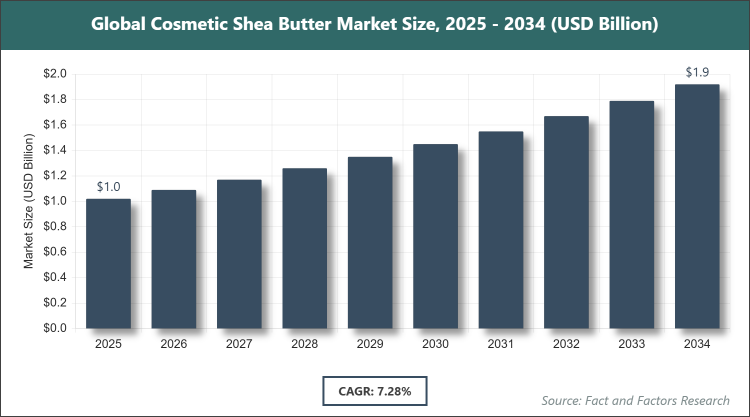
[230+ Pages Report] According to Facts & Factors, the global Cosmetic Shea Butter market size was estimated at USD 1.02 billion in 2025 and is expected to reach USD 1.92 billion by the end of 2034. The Cosmetic Shea Butter industry is anticipated to grow by a CAGR of 7.28% between 2026 and 2034. The Cosmetic Shea Butter Market is driven by rising consumer demand for natural and organic personal care products.
 Market Overview
Cosmetic Shea Butter refers to the natural fat derived from the nuts of the shea tree (Vitellaria paradoxa), primarily sourced from West African regions, and refined or processed specifically for use in beauty and personal care formulations. Renowned for its rich content of fatty acids, vitamins (particularly A and E), and antioxidants, it functions as an effective emollient, providing deep hydration, soothing irritation, reducing inflammation, and offering natural protection against environmental damage. This versatile ingredient is integral to clean beauty philosophies, supporting formulations that prioritize plant-based, sustainable, and ethically sourced components while delivering tangible skin and hair benefits without synthetic additives.
Key Insights
- As per the analysis shared by our research analyst, the Cosmetic Shea Butter market is expected to grow at a CAGR of 7.28% during the forecast period 2026-2034.
- In terms of revenue, the market was valued at USD 1.02 billion in 2025 and is projected to reach USD 1.92 billion by 2034.
- The market is driven by rising consumer demand for natural and organic personal care products, the popularity of vegan and cruelty-free formulations, and advancements in sustainable extraction methods.
- Based on the Type segment, Raw/Unrefined Shea Butter dominates with approximately 63% share, as it preserves essential bioactive compounds, vitamins, and antioxidants, appealing to premium brands seeking authentic, high-efficacy ingredients for natural skincare lines.
- Based on the Application segment, Skin Care dominates with around 40% share, primarily because of shea butter's unmatched moisturizing, anti-inflammatory, and barrier-repairing properties that effectively address dryness, eczema, and aging concerns in a wide range of creams and lotions.
- Based on the Region segment, Europe dominates with over 35% share, supported by environmentally conscious consumers, stringent regulations promoting natural ingredients, and a mature cosmetics industry that prioritizes sustainable and high-quality sourcing.
Growth Drivers
- Rising Demand for Natural and Organic Personal Care Products
Consumers worldwide are increasingly shifting toward clean beauty and plant-based ingredients, viewing shea butter as a safe, multifunctional alternative to synthetic emollients. This trend is amplified by growing awareness of chemical sensitivities and environmental impact, prompting brands to incorporate shea butter into moisturizers, balms, and serums for its proven hydrating and nourishing effects.
The clean beauty movement has accelerated adoption among millennials and Gen Z, who prioritize transparency, ethical sourcing, and sustainability, further boosting demand for certified organic and fair-trade shea butter in premium product lines.
- Growing Popularity of Vegan and Cruelty-Free Formulations
Vegan and cruelty-free cosmetics have gained significant traction, with shea butter serving as a key animal-free emollient that aligns with ethical consumer values. Brands leverage its natural origin to appeal to conscious buyers seeking effective yet compassionate skincare solutions.
This driver is particularly strong in developed markets where certifications and labeling influence purchasing decisions, enabling manufacturers to differentiate products through shea butter's inclusion in formulations that avoid animal-derived ingredients.
Restraints
- Supply Chain Vulnerabilities
Shea butter production is concentrated in West Africa, making the supply chain susceptible to climate variability, political instability, and logistical disruptions that can affect availability and pricing consistency for global cosmetic manufacturers.
These vulnerabilities often lead to fluctuations in raw material quality and volume, challenging brands reliant on steady supplies for large-scale production and long-term formulation planning.
- Complex Certification Processes for Organic and Fair-Trade Status
Obtaining organic or fair-trade certifications involves rigorous standards, lengthy audits, and high costs, which can deter smaller producers and limit the availability of premium certified shea butter in the market.
This restraint particularly impacts the growth of organic segments, as certification delays and expenses raise barriers for entry and expansion in eco-conscious consumer segments.
Opportunities
- Expansion in Emerging Markets
Rapid urbanization and rising disposable incomes in Asia-Pacific and Latin America present untapped potential for shea butter in affordable yet natural cosmetic products tailored to local skin and hair needs.
Increasing e-commerce penetration and beauty influencer trends in these regions can accelerate adoption, enabling brands to introduce innovative shea-based formulations to growing middle-class consumers.
- Advancements in Extraction and Fractionation Technologies
Innovations in processing techniques allow better preservation of bioactive compounds while improving shelf life and customization for specific applications, opening doors for high-performance cosmetic ingredients.
These advancements support product diversification, such as lightweight fractionated shea for color cosmetics, enhancing market penetration in premium and functional beauty categories.
Challenges
- Maintaining Bioactive Integrity During Processing and Transport
Long-distance shipping and extended storage can degrade shea butter's vitamins and antioxidants, reducing efficacy in final cosmetic products and affecting brand reputation.
Producers face pressure to implement advanced preservation methods without compromising natural attributes, balancing quality control with cost considerations.
- Stringent Regulatory Requirements
Evolving cosmetic regulations in major markets demand compliance with safety, labeling, and sustainability standards, increasing testing and documentation burdens for suppliers and manufacturers.
Navigating these regulations requires ongoing investment in quality assurance, potentially slowing innovation and market entry for new entrants.
Report Scope
Report Attribute |
Details |
Market Size 2025 |
USD 1.02 Billion |
Projected Market Size in 2034 |
USD 1.92 Billion |
CAGR Growth Rate |
7.28% CAGR |
Base Year |
2025 |
Forecast Years |
2026-2034 |
Key Market Players |
AAK AB, Bunge Global SA, Cargill Incorporated, Olvea Group, Vantage Specialty Ingredients, BASF SE, Croda International Plc, Clariant AG, and Others. |
Key Segment |
By Type, By Application, and By Region |
Major Regions Covered |
North America, Europe, Asia Pacific, Latin America, and the Middle East & Africa |
Purchase Options |
Request customized purchase options to meet your research needs. Explore purchase options |
Market Segmentation
The Cosmetic Shea Butter market is segmented by type, application, and region.
Based on Type Segment, the Cosmetic Shea Butter market is divided into Raw/Unrefined, Refined, Fractionated/Ultra-Refined, and others. Raw/Unrefined Shea Butter is the most dominant segment due to its retention of natural vitamins, antioxidants, and fatty acids, making it highly desirable for authentic, high-performance skincare and haircare products that appeal to clean beauty consumers seeking minimal processing. The second most dominant is Refined Shea Butter, which offers improved consistency, longer shelf life, and neutral scent, enabling its use in a broader range of formulations including sensitive skin products and mass-market cosmetics where stability and odor control are essential.
Based on Application Segment, the Cosmetic Shea Butter market is divided into Skin Care, Hair Care, Color Cosmetics, Sun Care, and others. Skin Care is the most dominant application, driven by shea butter's exceptional moisturizing, soothing, and anti-aging properties that make it a staple in creams, lotions, balms, and serums addressing dryness, irritation, and environmental damage. The second most dominant is Hair Care, where its conditioning, scalp-nourishing, and protective qualities help repair damaged strands, reduce frizz, and provide natural UV defense in shampoos, conditioners, and styling products.
Recent Developments
- In June 2025, a new shea processing facility was launched in Ilesha Baruba, Kwara State, by the Initiative for Gender Empowerment and Creativity (IGEC) with support from Estée Lauder and Vital Voices, focusing on empowering rural women and youth while enhancing high-quality cosmetic-grade production.
- In June 2025, the Global Shea Alliance partnered with eos Products and Water for West Africa to empower women processors in Ghana and Côte d’Ivoire, improving processing capacity, quality standards, access to clean water, and sustainable livelihoods for cosmetic supply chains.
- In December 2024, Ugandan researchers developed innovative shea butter fractionation technology at the Natural Chemotherapeutics Research Institute, enhancing quality, efficiency, output, and energy savings for use in premium cosmetics and personal care products.
Regional Analysis
- Europe to dominate the global market
Europe maintains its position as the leading region for cosmetic shea butter due to a sophisticated beauty industry, high consumer awareness of sustainability, and strict regulations that encourage the use of natural, traceable ingredients in skincare and haircare lines. Countries like France and Germany lead with major brands prioritizing ethical sourcing and clean formulations, supported by strong demand for premium, eco-friendly products that align with regional values of environmental responsibility and quality. The region's advanced distribution networks and focus on innovation further solidify its dominance.
Asia-Pacific emerges as the fastest-growing region, fueled by expanding middle-class populations, increasing beauty consciousness, and rising adoption of natural ingredients in skincare routines influenced by K-beauty and J-beauty trends. Rapid urbanization, e-commerce growth, and partnerships with African suppliers enhance accessibility, while consumers in China, India, and Southeast Asia seek effective, plant-based solutions for humid climates and pollution-related skin concerns.
North America benefits from strong demand for organic and cruelty-free cosmetics, with consumers favoring shea butter in anti-aging and sensitive skin products supported by regulatory frameworks and influential wellness trends. The United States leads with major brands incorporating sustainable shea into mainstream and indie lines, driven by transparency preferences and health-focused purchasing behaviors.
Latin America shows steady growth through increasing awareness of natural beauty solutions and cultural appreciation for plant-based ingredients, with Brazil and Mexico serving as key markets where shea butter is integrated into hair and skin products addressing diverse needs. Emerging sustainability initiatives and local partnerships contribute to gradual expansion.
The Middle East & Africa region, while smaller, holds potential through proximity to source countries and growing domestic cosmetic industries that value authentic shea butter for traditional and modern applications in skincare and haircare.
Competitive Analysis
The global Cosmetic Shea Butter market is dominated by players:
- AAK AB
- Bunge Global SA
- Cargill Incorporated
- Olvea Group
- Vantage Specialty Ingredients
- BASF SE
- Croda International Plc
- Clariant AG
- Sophim S.A.
- and Others.
The global Cosmetic Shea Butter market is segmented as follows:
By Type
- Raw/Unrefined
- Refined
- Fractionated/Ultra-Refined
- Others
By Application
- Skin Care
- Hair Care
- Color Cosmetics
- Sun Care
- Others
By Region
- North America
- The U.S.
- Canada
- Mexico
- Europe
- France
- The UK
- Spain
- Germany
- Italy
- Rest of Europe
- Asia Pacific
- China
- Japan
- India
- Australia
- Southeast Asia
- Rest of Asia Pacific
- The Middle East & Africa
- Saudi Arabia
- UAE
- Egypt
- Kuwait
- South Africa
- Rest of the Middle East & Africa
- Latin America
- Brazil
- Argentina
- Rest of Latin America
Industry Major Market Players
Frequently Asked Questions



Copyright © 2025 - 2026, All Rights Reserved, Facts and Factors