
E-KYC Market Overview
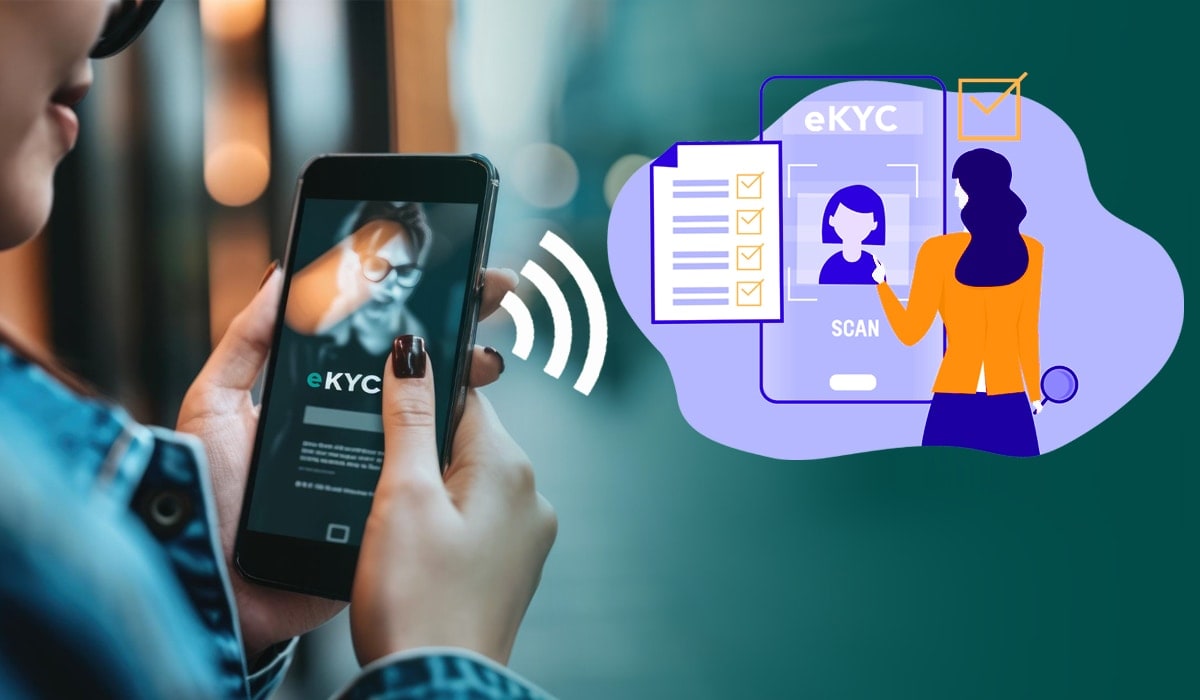
E-KYC assists in easing customer authentication along with facilitating swift onboarding of SME & retail consumers. Furthermore, it enables seamless digital processing of loan sanctioning and promotes digital lending. In addition to this, E-KYC has helped in expediting online payment activities along with increasing customer acquisition.
The surge in smartphone penetration, favorable legislation, and availability of high-speed 4G internet network facilities in emerging economies such as India has resulted in a rise in online banking activities, thereby providing impetus to the growth of the E-KYC industry.
As per recent studies published by Facts & Factors, the global e-KYC market size was worth around USD 1571.12 billion in 2021 and is predicted to grow to around USD 2792 billion by 2030 with a CAGR of roughly 21.55% between 2023 and 2030.
Top 10 Companies in the E-KYC Market
Below is an updated look at the leading e-KYC companies shaping the market in 2026, combining legacy strength with innovation in AI, biometric identity, and compliance automation.
IDnow GmbH (Germany):
The firm was established in 2014 in Munich, Germany. It has specialized in video identification for end-users along with e-signatures. Its video identification procedure was patented in May 2016. Moreover, it offers E-KYC services across different business verticals, including telecom firms, fintech, and banks. Moreover, it has renowned clients in Europe and abroad, including UBS, N26, Commerzbank, Telefonica, and Sixt Neuwagen.
Pegasystems Inc. (U.S.):
It was set up in Cambridge, Massachusetts in the U.S. in 1983. The company develops customer relationship management software. A key product of the firm includes the Pega Platform a component of the Pega Infinity app suite for robotic process automation & customer engagement process.
Tata Consultancy Services (India):
Founded in Mumbai, Maharashtra, in 1968, it offers services in IT, outsourcing, and consulting. Moreover, its other services include cyber security, enterprise solutions, blockchain, cloud, automation & AI, and quality engineering. The company operates across various industries such as BFSI, insurance, public services, retail, education, hi-tech, communications, media & technology, life sciences & healthcare, consumer goods & distribution, energy, resources & utilities, and travel, transportation & hospitality.
Wipro Technologies (India):
It was based in Bangalore, Karnataka, in 1999-2000. It offers services in aerospace & defense, education, healthcare, capital markets, automotive, oil & gas, utilities, insurance, consumer electronics, banking, medical devices, communications, pharmaceutical & life sciences, engineering, construction & operations, and industrial & process manufacturing.
Trulioo (Canada):
It was established in Vancouver, Canada, in January 2011. Moreover, it offers e-identification solutions and e-address verification for different business verticals as well as for individuals. End-users of Trulioo make use of these e-KYC solutions for verifying the identity of their clients.
Chekk (Hong Kong):
It was found in Hong Kong in 2013 and provides a strong digital identity & KYC platform for shifting personal data ownership from various business verticals to individuals, thereby benefitting both of them. Reportedly, in December 2021, KPMG France & Chekk declared an alliance for aiding customer onboarding for financial institutions.
W2 Global Data Solutions Limited (UK):
The firm, which was founded in Cardiff, UK, in 2011, offers services such as customer identity verification & anti-money laundering compliance solutions through single access points. Apart from this, it also provides fraud detection solutions to its customers, from startups to giant firms.
GB Group PLC (UK):
It was founded in Chester, the UK, in 1989 and provides identity verification, fraud detection, and location intelligence solutions. Apart from this, the firm offers software & data to organizations for validating & checking the identity as well as the location of their consumers.
Onfido (UK):
It was established in London, UK, in July 2012 by Husayn Kassai, Ruhul Amin, and Eamon Jubbawy. The firm assists businesses to check the identity of individuals through the use of machine learning algorithms and photo-based identity documents.
Mitek Systems, Inc. (U.S.):
It was set up in California in the U.S. in 1986, operating in the online identity verification industry and providing these online photo identity verification services, such as passport verification, ID card identification, and driver license identification, with the help of AI algorithms.
E-KYC Today: What’s New in 2026?
The e-KYC market in 2026 is much more than basic identity checks. Key trends influencing growth and search interest include
-
AI and Machine Learning Enhancements
Providers are investing heavily in AI-driven fraud detection, automated decisioning, and risk scoring, pushing accuracy and speed significantly higher than traditional approaches. -
Global Identity Networks
Cross-border verification capabilities are increasingly necessary as companies expand internationally. Networks that tap multiple regional databases ensure broader coverage and compliance. -
Stronger Security & Compliance Standards
With evolving data privacy laws and higher penalties for breaches, compliance features, including encryption, retention controls, and audit logs, have become essential.
FAQ’s
Q1. What is e-KYC, and why does it matter in 2026?
Electronic Know Your Customer (e-KYC) refers to digital methods of verifying customer identity using biometric, AI, document verification, and video systems. Its adoption is crucial to reduce fraud, speed onboarding, and meet global regulatory compliance.
Q2. How do e-KYC solutions help fintech and banks?
They automate identity verification, reduce manual errors, speed customer onboarding, support AML compliance, and improve security with AI-based fraud detection.
Q3. Which e-KYC technologies are trending in 2026?
AI/ML identity verification, biometric & facial recognition, video KYC, deep learning fraud analytics, and decentralized digital identity frameworks are key trends.
Browse the full “E-KYC Market Size, Share, Growth Analysis Report By Deployment Mode (On-Premise and Cloud-Based), By Product (Video Verification, Digital ID Schemes, and Identity Authentication & Matching), By End-User (Insurance Companies, Financial Institutions, Banks, Government Entities, Telecom Companies, and E-payment Service Providers), and By Region – Global and Regional Industry Insights, Overview, Comprehensive Analysis, Trends, Statistical Research, Market Intelligence, Historical Data and Forecast 2023 – 2030″ report at https://www.fnfresearch.com/e-kyc-market