
Search Market Research Report
Bay leaf Market Size, Share Global Analysis Report, 2026-2034

Bay leaf Market Size, Share, Growth Analysis Report By Type (California Bay Leaf, Turkish Bay Leaf, Indonesian Bay Leaf, Indian Bay Leaf, and Others), By Form (Whole Leaf, Powder, Oil, and Others), By Application (Food and Beverages, Pharmaceuticals, Cosmetics and Personal Care, and Others), By Distribution Channel (Supermarkets/Hypermarkets, Convenience Stores, Online Retail, and Others), and By Region - Global Industry Insights, Overview, Comprehensive Analysis, Trends, Statistical Research, Market Intelligence, Historical Data and Forecast 2026-2034
Industry Insights
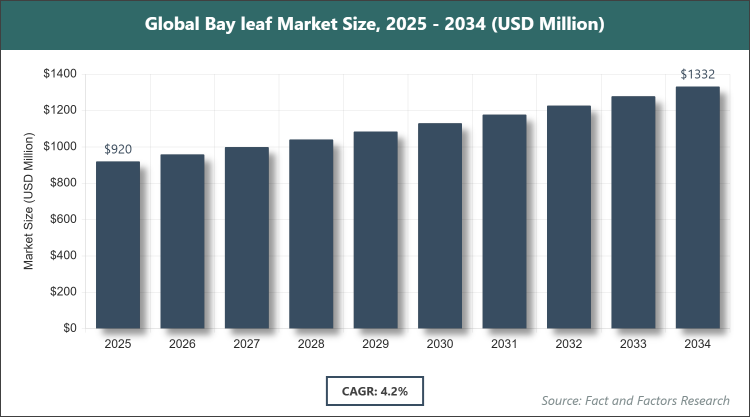
[228 Pages Report] According to Facts & Factors, the global bay leaf market size was estimated at USD 0.92 billion in 2025 and is expected to reach USD 1.42 billion by the end of 2034. The Bay leaf industry is anticipated to grow by a CAGR of 4.2% between 2026 and 2034. The Bay Leaf Market is driven by increasing demand in the food and beverage industry due to the rising popularity of ethnic cuisines.
 Market Overview
The bay leaf market refers to the global trade and consumption of bay leaves, which are aromatic leaves derived from the bay laurel tree or similar species, primarily used as a flavoring agent in culinary applications to enhance the taste of soups, stews, and sauces, while also finding roles in traditional medicine, cosmetics, and pharmaceuticals for their essential oils and bioactive compounds that offer anti-inflammatory and antioxidant properties. This market involves cultivation, processing, and distribution through various channels, catering to both commercial food producers and individual consumers seeking natural ingredients for health and flavor enhancement in diverse cultural contexts.
Key Insights
- As per the analysis shared by our research analyst, the Bay leaf market is expected to grow at a CAGR of 4.2% during the forecast period of 2026-2034.
- In terms of revenue, the Bay leaf market size was valued at about USD 0.92 billion in 2025 and is expected to reach USD 1.42 billion by 2034.
- The Bay leaf market is driven by increasing demand in the food and beverage industry due to the rising popularity of ethnic cuisines.
- Based on the type, the California Bay Leaf segment dominated the market with a share of 42.7% in 2025 due to its strong flavor profile preferred in premium culinary applications and widespread availability in key markets.
- Based on the form, the whole leaf segment dominated the market with a share of 60% in 2025 owing to its traditional use in cooking where it imparts subtle flavors without overpowering dishes, maintaining authenticity in recipes.
- Based on the application, the food and beverages segment dominated the market with a share of 55.3% in 2025 because of bay leaf's essential role as a seasoning in global cuisines, driving consistent demand from food manufacturers and households.
- Based on the distribution channel, the supermarkets/hypermarkets segment dominated the market with a share of 45% in 2025 as it offers convenient access to a variety of bay leaf products for bulk and retail consumers.
- Asia Pacific dominated the market with a share of 40% in 2025 due to extensive production in countries like India and Indonesia, supported by favorable climatic conditions and established export networks.
Growth Drivers
- Rising Popularity of Ethnic Cuisines
The growing interest in diverse global flavors has boosted the incorporation of bay leaves in Mediterranean, Indian, and Middle Eastern dishes, as consumers seek authentic taste experiences in home cooking and restaurant menus, fueled by globalization and culinary tourism. This driver is enhanced by the expansion of ready-to-eat meals and spice blends that feature bay leaves as a key ingredient.
Furthermore, social media and cooking shows have popularized exotic recipes, increasing awareness and usage among younger demographics, thereby sustaining demand and encouraging suppliers to innovate in packaging and product forms to meet evolving consumer preferences.
- Health Benefits Awareness
Increased consumer knowledge of bay leaves' antioxidant, anti-inflammatory, and digestive properties is driving their use in herbal teas, supplements, and natural remedies, aligning with the wellness trend and clean-label products in the food and pharmaceutical sectors. This is supported by scientific studies validating these benefits, leading to higher incorporation in functional foods.
Additionally, the shift towards natural alternatives over synthetic additives in cosmetics and nutraceuticals amplifies market growth, with brands marketing bay leaf extracts for skin health and stress relief, expanding its application beyond traditional culinary uses.
- Expansion of the Food and Beverage Industry
The booming processed food sector, including soups, sauces, and snacks, relies on bay leaves for flavor enhancement, driven by urbanization and busy lifestyles that favor convenient meal solutions. This growth is complemented by investments in food processing infrastructure in emerging economies.
Moreover, partnerships between spice producers and food giants foster innovation in flavored products, ensuring a steady supply chain and promoting bay leaves in new markets through co-branded items and promotional campaigns.
Restraints
- Supply Chain Disruptions
Vulnerability to weather changes and natural disasters in key producing regions like Turkey and India can lead to inconsistent supply and price volatility, affecting availability for global exporters and manufacturers. This restraint is exacerbated by logistical challenges in international trade.
Ongoing geopolitical issues and trade tariffs further complicate procurement, requiring diversified sourcing strategies to mitigate risks, though this increases operational costs for market players.
- Competition from Substitutes
Availability of alternative herbs like thyme or oregano, which offer similar flavor profiles, poses a threat to bay leaf demand, especially in cost-sensitive markets where substitutes are cheaper or more readily available. This is influenced by consumer experimentation with flavors.
Product innovation in synthetic flavorings also diverts demand, necessitating emphasis on bay leaf's unique natural benefits to maintain market share.
Opportunities
- Organic and Sustainable Products
The rising preference for organic bay leaves opens avenues for premium pricing and market differentiation, as eco-conscious consumers favor sustainably sourced spices certified free from pesticides. This opportunity aligns with global sustainability goals.
Investments in organic farming and certifications can attract health-focused buyers, expanding into niche markets like vegan and clean-eating products.
- Emerging Applications in Cosmetics
Bay leaf oils' integration into skincare and haircare products for their antimicrobial properties presents growth potential, tapping into the natural beauty trend. This can be leveraged through R&D for new formulations.
Collaborations with cosmetic brands can introduce bay leaf-infused lines, broadening revenue streams beyond food sectors.
Challenges
- Regulatory Compliance
Stringent food safety and quality standards in regions like Europe and North America require rigorous testing, increasing costs for exporters from developing countries. This challenge demands adherence to varying international regulations.
Evolving pesticide residue limits add complexity, necessitating ongoing monitoring and adaptation in cultivation practices.
- Price Volatility
Fluctuations due to crop yields and demand-supply imbalances affect profitability, particularly for small-scale farmers. This requires hedging strategies and market forecasting.
Global economic uncertainties further amplify this, impacting consumer spending on non-essential goods.
Report Scope
Report Attribute |
Details |
Market Size 2025 |
USD 0.92 Billion |
Projected Market Size in 2034 |
USD 1.42 Billion |
CAGR Growth Rate |
4.2% CAGR |
Base Year |
2025 |
Forecast Years |
2026-2034 |
Key Market Players |
McCormick & Company, Inc., Alpina Organic Company, Naturevibe Botanicals, Zizira, Augustus Oils Ltd., Spice World USA, Badia Spices, Anatoli Spices, Frontier Natural Products Co-op, Pacific Spice Company, Inc., Gourmet Foods Inc., Sultar Ltd, Mars Incorporated, Mountain Rose Herbs, Hoby Agriculture and Forest Product Co. Ltd, and Others. |
Key Segment |
By Type, By Form, By Application, By Distribution Channel, and By Region |
Major Regions Covered |
North America, Europe, Asia Pacific, Latin America, and the Middle East & Africa |
Purchase Options |
Request customized purchase options to meet your research needs. Explore purchase options |
Market Segmentation
The Bay leaf market is segmented by type, form, application, distribution channel, and region.
Based on Type Segment, the bay leaf market is divided into California Bay Leaf, Turkish Bay Leaf, Indonesian Bay Leaf, Indian Bay Leaf, and others. The most dominant segment is California Bay Leaf, leading the market due to its robust flavor that enhances a variety of dishes, making it a staple in North American and European cuisines, and driving overall market growth through high export volumes and integration in processed foods; the second most dominant is Turkish Bay Leaf, which gains prominence for its milder taste preferred in Mediterranean recipes, contributing to market expansion by catering to traditional and gourmet applications in global food industries.
Based on Form Segment, the bay leaf market is divided into whole leaf, powder, oil, and others. The most dominant segment is whole leaf, commanding the largest share because of its versatility in slow-cooking methods where it releases flavors gradually, essential for authentic culinary preparations, thus propelling market growth via widespread use in households and restaurants; the second most dominant is powder, utilized for its convenience in spice blends and instant mixes, aiding market drive by facilitating quick incorporation in modern cooking and food manufacturing processes.
Based on Application Segment, the bay leaf market is divided into food and beverages, pharmaceuticals, cosmetics and personal care, and others. The most dominant segment is food and beverages, dominating owing to bay leaf's fundamental role as a seasoning in soups, stews, and beverages like teas, boosting demand through the expanding global food industry and ethnic cuisine trends; the second most dominant is pharmaceuticals, where its medicinal properties for digestion and inflammation support growth by integrating into herbal supplements and remedies, enhancing market reach in health sectors.
Based on Distribution Channel Segment, the bay leaf market is divided into supermarkets/hypermarkets, convenience stores, online retail, and others. The most dominant segment is supermarkets/hypermarkets, leading due to their extensive product variety and bulk purchasing options that attract both retail and commercial buyers, driving market growth through accessibility and promotional displays; the second most dominant is online retail, growing rapidly with e-commerce platforms offering convenience and global reach, helping to expand the market by reaching remote consumers and supporting direct-to-consumer sales.
Recent Developments
- In June 2025, Frontier Natural Products Co-op launched a new line of Regenerative Organic Certified spices, including bay leaves, to meet the demand for sustainable and ethically sourced products.
- In February 2024, a major spice supplier introduced a new line of organic bay leaves, aligning with consumer preferences for natural and sustainable ingredients in culinary applications.
- In October 2021, a leading spice company expanded its bay leaf portfolio by launching ground bay leaves, enhancing convenience for quick use in recipes and spice blends.
- In June 2019, Feragaia introduced a non-alcoholic spirit in the U.K. market featuring bay leaf among other botanicals, targeting the growing trend for premium non-alcoholic beverages.
- In June 2018, Naturevibe Botanicals entered the Indian market with herbal powders, including bay leaf variants, to capitalize on the rising demand for natural health products.
Regional Analysis
- Asia Pacific to dominate the global market
Asia Pacific holds the leading position in the bay leaf market, with India as the dominating country, where extensive cultivation in regions like Uttarakhand and Kerala benefits from ideal tropical climates and rich soil, enabling high-yield production that supports both domestic consumption in traditional cuisines and significant exports to global markets, while government initiatives for spice farming enhance quality and sustainability, fostering economic growth through farmer cooperatives and integrated supply chains that ensure consistent supply to food processors and international buyers.
North America follows closely, dominated by the United States, which imports large quantities for its diverse culinary scene influenced by immigrant populations and gourmet trends, with robust distribution networks in supermarkets and online platforms facilitating easy access, alongside growing use in pharmaceuticals for natural remedies, supported by advanced food industry infrastructure that incorporates bay leaves in processed foods and health products to meet consumer demands for flavorful and beneficial ingredients.
Europe maintains a strong market presence, led by Germany, where bay leaves are integral to traditional dishes like sauerbraten and soups, driven by a mature food and beverage sector emphasizing quality spices, with increasing adoption in cosmetics for essential oils, bolstered by stringent regulations ensuring product safety and traceability, while cultural festivals and cooking shows promote usage among households, contributing to steady demand across retail channels.
Latin America shows emerging potential, with Mexico as the key country, utilizing local varieties in authentic cuisines such as moles and stews, where growing tourism boosts restaurant demand, combined with exports to North America, supported by favorable growing conditions in coastal areas that allow for year-round harvesting, and initiatives for organic certification attracting premium markets focused on sustainable sourcing.
The Middle East & Africa region is gaining traction, dominated by Turkey, a major producer of high-quality bay leaves exported worldwide, benefiting from Mediterranean climate ideal for cultivation, with applications in regional dishes and teas, enhanced by trade agreements facilitating access to European and Asian markets, while local herbal medicine traditions drive pharmaceutical use, promoting overall market growth through diversified applications.
Competitive Analysis
The global Bay leaf market is dominated by players:
- McCormick & Company, Inc.
- Alpina Organic Company
- Naturevibe Botanicals
- Zizira
- Augustus Oils Ltd.
- Spice World USA
- Badia Spices
- Anatoli Spices
- Frontier Natural Products Co-op
- Pacific Spice Company, Inc.
- Gourmet Foods Inc.
- Sultar Ltd
- Mars Incorporated
- Mountain Rose Herbs
- Hoby Agriculture and Forest Product Co. Ltd
The global Bay leaf market is segmented as follows:
By Type
- California Bay Leaf
- Turkish Bay Leaf
- Indonesian Bay Leaf
- Indian Bay Leaf
- Others
By Form
- Whole Leaf
- Powder
- Oil
- Others
By Application
- Food and Beverages
- Pharmaceuticals
- Cosmetics and Personal Care
- Others
By Distribution Channel
- Supermarkets/Hypermarkets
- Convenience Stores
- Online Retail
- Others
By Region
- North America
- The U.S.
- Canada
- Mexico
- Europe
- France
- The UK
- Spain
- Germany
- Italy
- Rest of Europe
- Asia Pacific
- China
- Japan
- India
- Australia
- Southeast Asia
- Rest of Asia Pacific
- The Middle East & Africa
- Saudi Arabia
- UAE
- Egypt
- Kuwait
- South Africa
- Rest of the Middle East & Africa
- Latin America
- Brazil
- Argentina
- Rest of Latin America
Industry Major Market Players
The global Bay leaf market is dominated by players:
McCormick & Company, Inc.
Alpina Organic Company
Naturevibe Botanicals
Zizira
Augustus Oils Ltd.
Spice World USA
Badia Spices
Anatoli Spices
Frontier Natural Products Co-op
Pacific Spice Company, Inc.
Gourmet Foods Inc.
Sultar Ltd
Mars Incorporated
Mountain Rose Herbs
Hoby Agriculture and Forest Product Co. Ltd
Frequently Asked Questions



Copyright © 2025 - 2026, All Rights Reserved, Facts and Factors